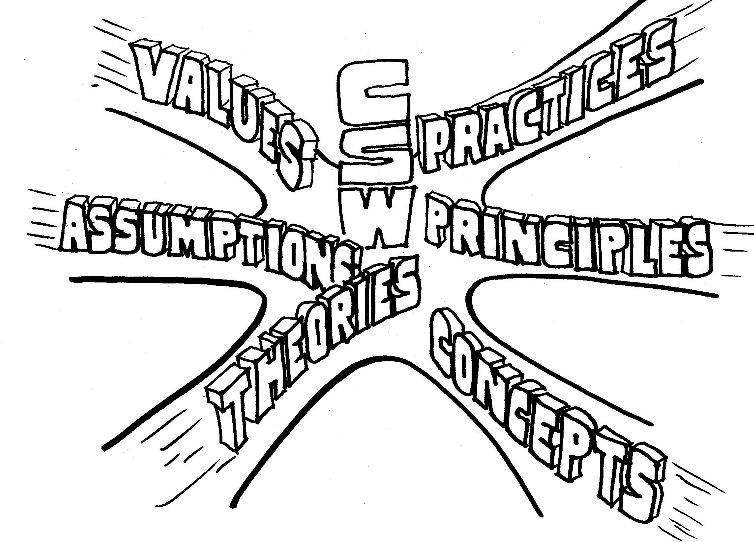
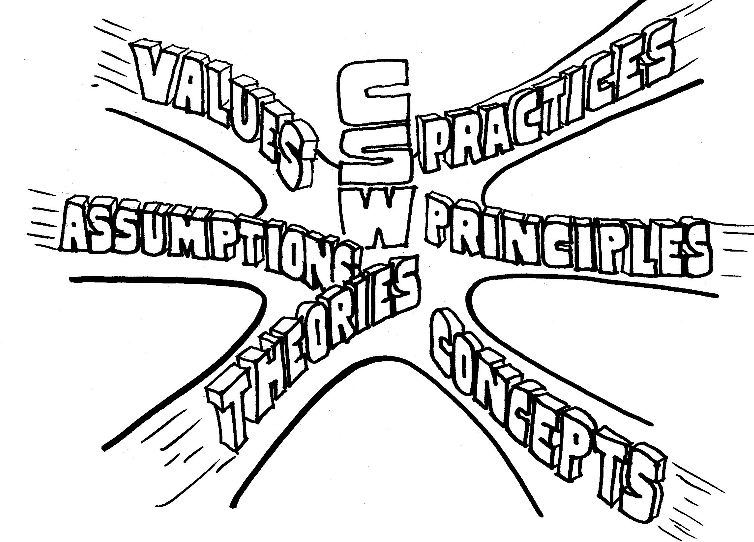
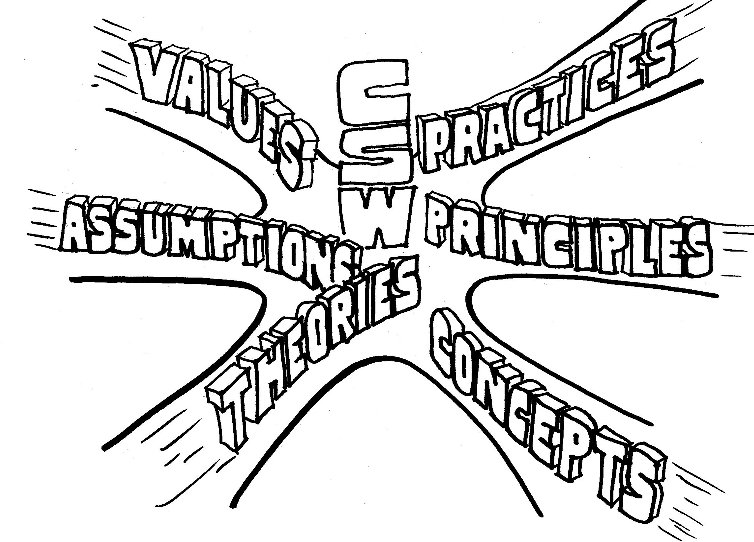
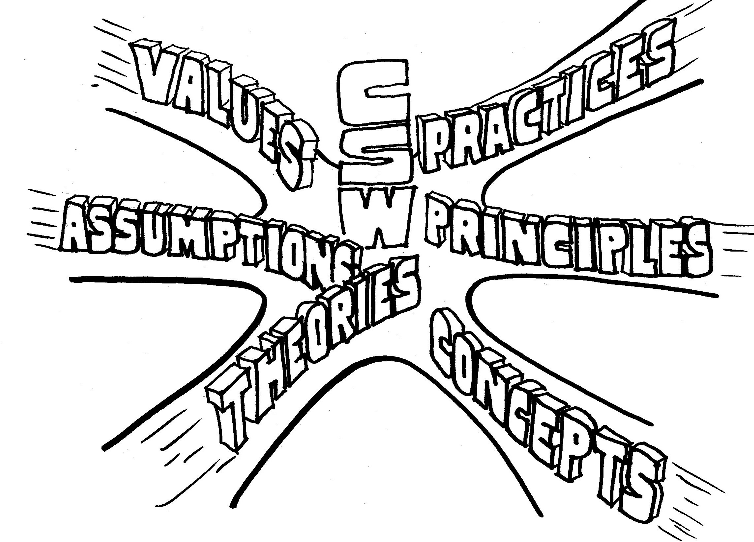
This module will develop your knowledge and understanding of some of the critical debates and issues relevant to contemporary practice and to explore wider concepts applicable to Animation and Illustration
- Teacher: Samantha Williams
This module will develop your knowledge and understanding of some of the critical debates and issues relevant to contemporary practice and to explore wider concepts applicable to Animation and Illustration

In this module you will develop your knowledge and understanding of some of the critical debates and issues relevant to contemporary practice. It will provide an exciting opportunity for you to explore wider concepts that are applicable to your subject specialism and build on the understanding gained in the HE4 contextual module. The themes explored are also applicable to professional practice modules in respect of the role of the animator/ illustrator. This module will also feed in to the HE6 contextual module.
Through a series of lectures and seminars you will explore some of the meanings, functions and intentions of practice within a dynamic set of theoretical considerations concerning the past, present and future. Research and study skills are an integral part of the module and blended learning forms part of the learning and teaching process, for example electronic checking of written work and participating in online discussions and research. This module emphasises the relevance of conceptual thinking as applied to practice and the themes and theories explored in the module should be applied to the practical modules.

This module develops and consolidates a student's ability to undertake a major research and writing project. It enables students to carry out an extended body of research on an agreed topic of their choice (appropriate to critical and contextual inquiry) relevant to Art and Practice, in conjunction with the supervisory team.
The module will focus on the various approaches to research and the two main approaches of qualitative and quantitative will be explicated. Attention will be paid to ethical research practices and that students are aware of codes of practice including the utilisation of human participants, environmental and cultural concerns relevant to their topic. Research and study skills will include: how to manage your project (time, workload and record keeping), how to undertake effective literature searches including the use of digital sources, and lastly, effective communication through a written extended assignment (including critical evaluation). These skills will be developed within the context of the subject area resulting in critical inquiry of a text/image format, for example an extended essay or extended report. It will emphasise the cultural, historical, theoretical and conceptual elements as necessary.

This module develops and consolidates a student's ability to undertake a major research and writing project. It enables students to carry out an extended body of research on an agreed topic of their choice (appropriate to critical and contextual inquiry) relevant to Art and Practice, in conjunction with the supervisory team. (The module will focus on the various approaches to research and the two main approaches of qualitative and quantitative will be explicated. Attention will be paid to ethical research practices and that students are aware of codes of practice including the utilisation of human participants, environmental and cultural concerns relevant to their topic.
Research and study skills will include - how to manage your project (time, workload and record keeping) ; how to undertake effective literature searches including the use of digital sources; and lastly, effective communication through a written extended assignment (including critical evaluation). These skills will be developed within the context of the subject area resulting in critical inquiry of a text/image format, for example an extended essay or extended report. It will emphasise the cultural, historical, theoretical and conceptual elements as necessary.

This module develops and consolidates a student's ability to undertake a major research and writing project. It enables students to carry out an extended body of research on an agreed topic of their choice (appropriate to critical and contextual inquiry) relevant to Art and Practice, in conjunction with the supervisory team. (The module will focus on the various approaches to research and the two main approaches of qualitative and quantitative will be explicated. Attention will be paid to ethical research practices and that students are aware of codes of practice including the utilisation of human participants, environmental and cultural concerns relevant to their topic.
Research and study skills will include - how to manage your project (time, workload and record keeping) ; how to undertake effective literature searches including the use of digital sources; and lastly, effective communication through a written extended assignment (including critical evaluation). These skills will be developed within the context of the subject area resulting in critical inquiry of a text/image format, for example an extended essay or extended report. It will emphasise the cultural, historical, theoretical and conceptual elements as necessary.
This Moodle page is part of the 2021 Campus Plus TIRI Showcase.
Title: Combining E-Learning and Face-to-Face Teaching – The Digitally Enhanced Flipped Classroom
In contrast to many other disciplines, law has been slow to implement innovative teaching strategies. There are many contributing factors. One significant factor can be found in the seemingly insurmountable quantity of information that needs to be conveyed in each lecture, often at the expense of practical skills training. Flipped classroom strategies are a convenient form of blended learning, whereby the content heavy learning elements are provided via reading tasks which are to be completed by students before they attend their lectures, thereby freeing up valuable face-to-face class time for live problem-solving activities. In theory, this approach presents an ideal solution to assist law teachers with the balancing of content and practical skills development and increased student engagement. 10 However, this approach only works effectively, if all students complete their reading tasks.
Yet, the past decades have witnessed a reduction of reading being undertaken in education – a trend which often is attributed to an increased usage of electronic devices. In the School of Law, the Covid-19 pandemic demonstrated how the popularity of devices such as laptops, tablet PCs and smartphones could be utilised to integrate more interactive digitally enhanced blended learning formats into structured legal learning environments. With this transition, the flipped classroom (FC) allowed for the effectively combining of e-learning and face-to-face teaching components. Tools, such as the H5P Moodle plugin or SCORM packages have enabled the School of Law to digitally enhance our flipped classroom strategies to increase student engagement by offering more interactive methods of knowledge acquisition than the traditional reading lists.
This module aims to help you gain knowledge and skills so that you can critically evaluate traditional and digital theories and concepts, and critically analyse the issues concerned with marketing planning, including macro environmental assessment, marketing mix development and market entry strategies. You will be given the opportunity to critically review marketing case studies, including live briefs, with an emphasis on the rise of, nature, and impact, of digital technology, E-Commerce and multichannel marketing. You will develop and critically apply knowledge and skills to help you identify and appraise marketing opportunities for both service and product marketing and apply methodologies for successful online and offline planning in domestic and international markets. The GAME attributes covered in this module are: Effective Communication and Adaptable.
This module provides a vehicle for all the elements of the Conceive-Design-Implement-Operate (CDIO) methodology, an internationally recognised model for the practical education of professional engineers (see www.cdio.org). It also brings in underpinning theory of systems, materials and processes to explain how designers have worked to arrive at current solutions, whilst facilitating the future development of your skills in engineering design. Physical and virtual logs of workshop and project work contribute to your CPD portfolio. This module teaches and assesses (SM3b) (P3) (EA3b) (EA4b) (D5) (D4) (P11) (G2) and develops (G1-G4) (P8) (D3b) (EA2) of the AHEP3 requirements for CEng.
Taught (T), Developed (D) and Assessed (A).
This module provides a vehicle for all the elements of the Conceive-Design-Implement-Operate (CDIO) methodology, an internationally recognised model for the practical education of professional engineers (see www.cdio.org). It also brings in underpinning theory of systems, materials and processes to explain how designers have worked to arrive at current solutions, whilst facilitating the future development of your skills in engineering design. Physical and virtual logs of workshop and project work contribute to your CPD portfolio. This module teaches and assesses (SM3b) (P3) (EA3b) (EA4b) (D5) (D4) (P11) (G2) and develops (G1-G4) (P8) (D3b) (EA2) of the AHEP3 requirements for CEng.

The purpose of this module is to develop and extend your knowledge and understanding of the theory, practice and utility of Finite Element and Finite Difference methods in order to develop solutions to a range of engineering problems e.g. of spaceframe, beam, plate and solids problems. Solutions will involve employing the stiffness matrix and load/displacement equation approach in order to solve benchmark problems related to force, temperature and/or time dependency. The module will also look at the application of industry standard Finite Element Analysis and Simulation packages. This module teaches and assesses (C1), (C4), (C5) and (C13) requirements for CEng.

The purpose of this module is to develop and extend your knowledge and understanding of the theory, practice and utility of Finite Element and Finite Difference methods in order to develop solutions to a range of engineering problems e.g. of spaceframe, beam, plate and solids problems. Solutions will involve employing the stiffness matrix and load/displacement equation approach in order to solve benchmark problems related to force, temperature and/or time dependency. The module will also look at the application of industry standard Finite Element Analysis and Simulation packages. This module teaches and assesses (C1), (C4), (C5) and (C13) requirements for CEng.
This module will develop your knowledge and understanding of some of the critical debates and issues relevant to contemporary practice. It will provide an exciting opportunity for you to explore wider concepts that are applicable to your subject specialism. Through a series of lectures and seminars you will explore some of the meanings, functions and intentions of practice within a dynamic set of theoretical considerations concerning the past, present and future. Research and study skills are an integral part of the module and blended learning forms part of the learning and teaching process, for example electronic checking of written work and participating in online discussions and research. This module emphasises the relevance of conceptual thinking as applied to practice.

This module will develop your knowledge and understanding of some of the critical debates and issues relevant to contemporary practice. It will provide an exciting opportunity for you to explore wider concepts that are applicable to your subject specialism.
Through a series of lectures and seminars you will explore some of the meanings, functions and intentions of practice within a dynamic set of theoretical considerations concerning the past, present and future.
Research and study skills are an integral part of the module and blended learning forms part of the learning and teaching process, for example electronic checking of written work and participating in online discussions and research. This module emphasises the relevance of conceptual thinking as applied to practice.

In this module you will explore some of the critical debates and issues relevant to contemporary Animation and Illustration practice including, authorship, semiotics and visual representation. You will be introduced to some of the more advanced theories and concepts relevant to the creative industries together with some of the issues facing you as future practitioners. It will expand on the issues and theories introduced in HE4, analysing social and political issues and concepts. You will consider the theories of Authorship and Ethics. You will also explore in more detail Semiotics and other relevant visual theories and how these theories can be applied to work for other creative and theoretical modules

Refik Anadol views AI as a creative partner and extension of the human mind
This module will introduce you to the creative industries, offering an opportunity to explore and examine the social, cultural and historical contexts that underpin creative practice. You will develop an understanding of key issues that impact and drive creative practitioners, such as culture, diversity, sustainability and ethics. You will explore key theories, texts and industry research that informs contemporary creative practice and develop relevant visual and textual communication skills. This module will introduce you to the relevant professional and academic skills necessary to both complete your course and begin your career as a creative practitioner, alongside professional communication skills and digital literacies, such as academic and reflective writing, as well as research and analytical skills.

Welcome!
Welcome to the Moodle site that supports you to complete your ePortfolio. The theory–practice link is of great importance when undertaking a Foundation Degree in Health and Social Care. the tasks and activities set out in your ePortfolio will help you to reflect on practice and draw on practical experiences throughout the programme.
On this Moodle site you will find direct links to the ePortfolio platform - PEBBLE PAD and some additional resources to help you to navigate the systems.
There are resources that you can download and complete as part of the process. These can be saved and uploaded to YOUR Pebble Pad platform as an ASSET.
When you are ready click on the links below and explore!
We look forward to supporting you on this journey!
Andy and Angela

Placements are a practice-based component of PA education that enables you to apply theoretical knowledge in real clinical settings under supervision. Through rotations across primary and secondary care environments, you can gain exposure to a diverse range of patients, conditions, and healthcare contexts. There is a focus on developing essential clinical skills such as history taking, physical examination, clinical reasoning, and patient communication, while also fostering professionalism and ethical practice. Supervised by qualified healthcare practitioners, you will receive ongoing feedback to support your development and ensure patient safety. Reflective activities, such as maintaining a clinical portfolio or journal, encourage critical thinking and continuous learning. Assessment is formative, incorporating tools such as observed clinical encounters, case-based discussions, and supervisor evaluations. Overall, placements play a crucial role in preparing you to become competent, confident, and safe practitioners within multidisciplinary healthcare teams.
This module is designed to develop the learner’s knowledge of economic and marketing theory and practice and to develop deeper comprehension of the issues and challenged facing marketers in a global context. The module will help the learner develop knowledge of international marketing models and concepts against the backdrop of current affairs in global business and markets. Emphasis will be placed on the development of the skills and knowledge needed to deal with a range of global marketing related issues and problems through the critical evaluation of a range of alternative approaches.

This module requires students to analyse key concepts and theories of organisational culture and behaviour. It will investigate the fundamentals of leadership and management in relation to developing and enhancing cultures within the organisational setting whilst exploring how each influences cultural change and adoption. Students will look to identify, assess and develop their own leadership behaviours in line with both academic theory and practical applications in the contemporary workplace. In addition, students will develop an understanding of the influence of integrating and applying the concepts of inclusivity, equality and diversity. This module will incorporate the following GME attributes: Global Citizen and Adaptable.

This module requires students to analyse key concepts and theories of organisational culture and behaviour. It will investigate the fundamentals of leadership and management in relation to developing and enhancing cultures within the organisational setting whilst exploring how each influences cultural change and adoption. Students will look to identify, assess and develop their own leadership behaviours in line with both academic theory and practical applications in the contemporary workplace. In addition, students will develop an understanding of the influence of integrating and applying the concepts of inclusivity, equality and diversity.
This module aims to cover how cells function at a molecular level and specifically how they work and replicate efficiently. It outlines the implications of faults in processes, such as those that can give rise to genetic diseases. Further, it emphasises the theoretical and practical aspects of DNA technology and the many applications that can benefit mankind, from improving crop yield to curing genetic disorders by gene therapy. All lectures are underpinned by related practical work.
This module aims to introduce you to basic electrical and electronic principles in the context of Biomedical engineering instrumentation. You will explore the laws and theorems relative to DC / AC electrical and electronic systems in the classroom, but you will also have the opportunity to relate this to physical systems by undertaking practical experiments in the laboratory. Within these laboratory sessions, you will learn to use electrical measuring instruments, and be introduced to electrical machines such as transformers, generators, and motors. Biomedical Instrumentation will be considered including the types of sensors for both medical practice and the diagnostic laboratory. This module teaches and assesses C1, C2, C5, C9 and C12, and develops C3, C10, C14 and C15 of the AHEP4 for CEng. The GAME attributes covered are resilience and problem solver.
This module provides a vehicle for all the elements of the Conceive-Design-Implement-Operate (CDIO) methodology, an internationally recognised model for the practical education of professional engineers (see www.cdio.org). It also brings in underpinning theory of systems, materials and processes to explain how designers have worked to arrive at current solutions, whilst facilitating the future development of your skills in engineering design. Physical and virtual logs of workshop and project work contribute to your CPD portfolio. It will also provide the necessary study skill support (from both a mathematics and English perspective) to assist you in the completion of your assessments. In addition to this, the fundamental principles and biomedical applications of a variety of topics from across the medical and biomedical engineering degree programmes will be introduced by a series of seminars. This module teaches and assesses (Sm3b) (EA3b/4b) (D4/5/6) (P3/11b) (G2) and develops (Sm1b) (EA1b) (D1/2/3b) (EL1/2/3b/4/6b) (P1/2/8) (G1/3b/4) .
Taught (T), Developed (D) and Assessed (A).
This module provides a vehicle for all the elements of the Conceive-Design-Implement-Operate (CDIO) methodology, an internationally recognised model for the practical education of professional engineers (see www.cdio.org). It also brings in underpinning theory of systems, materials and processes to explain how designers have worked to arrive at current solutions, whilst facilitating the future development of your skills in engineering design. Physical and virtual logs of workshop and project work contribute to your CPD portfolio. It will also provide the necessary study skill support (from both a mathematics and English perspective) to assist you in the completion of your assessments. In addition to this, the fundamental principles and biomedical applications of a variety of topics from across the medical and biomedical engineering degree programmes will be introduced by a series of seminars. This module teaches and assesses (Sm3b) (EA3b/4b) (D4/5/6) (P3/11b) (G2) and develops (Sm1b) (EA1b) (D1/2/3b) (EL1/2/3b/4/6b) (P1/2/8) (G1/3b/4) .
Taught (T), Developed (D) and Assessed (A).
This module provides a vehicle for all the elements of the Conceive-Design-Implement-Operate (CDIO) methodology, an internationally recognised model for the practical education of professional engineers (see www.cdio.org). It also brings in underpinning theory of systems, materials and processes to explain how designers have worked to arrive at current solutions, whilst facilitating the future development of your skills in engineering design. Physical and virtual logs of workshop and project work contribute to your CPD portfolio. It will also provide the necessary study skill support (from both a mathematics and English perspective) to assist you in the completion of your assessments. In addition to this, the fundamental principles and biomedical applications of a variety of topics from across the medical and biomedical engineering degree programmes will be introduced by a series of seminars. This module teaches and assesses (Sm3b) (EA3b/4b) (D4/5/6) (P3/11b) (G2) and develops (Sm1b) (EA1b) (D1/2/3b) (EL1/2/3b/4/6b) (P1/2/8) (G1/3b/4).
This module provides a vehicle for all the elements of the Conceive-Design-Implement-Operate (CDIO) methodology, an internationally recognised model for the practical education of professional engineers (see www.cdio.org). It also brings in underpinning theory of systems, materials and processes to explain how designers have worked to arrive at current solutions, whilst facilitating the future development of your skills in engineering design. Physical and virtual logs of workshop and project work contribute to your CPD portfolio. It will also provide the necessary study skill support (from both a mathematics and English perspective) to assist you in the completion of your assessments. In addition to this, the fundamental principles and biomedical applications of a variety of topics from across the medical and biomedical engineering degree programmes will be introduced by a series of seminars.
This module provides a vehicle for all the elements of the Conceive-Design-Implement-Operate (CDIO) methodology, an internationally recognised model for the practical education of professional engineers (see www.cdio.org). It also brings in the underpinning theory of systems, materials, and processes to explain how designers have worked to arrive at current solutions, whilst facilitating the future development of your skills in engineering design. Physical and virtual logs of workshop and project work contribute to your CPD portfolio. It will also provide the necessary study skill support (from both a mathematics and English perspective) to assist you in the completion of your assessments. In addition to this, the fundamental principles and biomedical applications of a variety of topics from across the medical and biomedical engineering degree programmes will be introduced by a series of seminars.
This module aims to further develop your theoretical knowledge of biomechanics acquired in level 4. It aims to further develop your ability to apply biomechanical principles to the analysis of human movement. You will gain theoretical knowledge of kinesiology, mechanical principles of movement, linear and angular kinematics and kinetics, and fluid mechanics. Furthermore you will gain practical knowledge and experience of executing practical laboratory activities to provide the skills required to monitor and evaluate human movement in laboratories and/or field settings.
The module also incorporates Personal Tutoring with the emphasis on developing study and learning skills and exploring strategies for effective learning in higher education (as part of personal development planning).
This module aims to further develop your theoretical knowledge of biomechanics acquired in level 4. It aims to further develop your ability to apply biomechanical principles to the analysis of human movement. You will gain theoretical knowledge of kinesiology, mechanical principles of movement, linear and angular kinematics and kinetics, and fluid mechanics. Furthermore you will gain practical knowledge and experience of executing practical laboratory activities to provide the skills required to monitor and evaluate human movement in laboratories and/or field settings.
The module also incorporates Personal Tutoring with the emphasis on developing study and learning skills and exploring strategies for effective learning in higher education (as part of personal development planning).
The Project involves an investigation into a medical/biomedical engineering problem, theory, or system in order to achieve aims and objectives leading to outcomes that are clearly defined at the outset. The project typically involves research, lab-based or workshop-based activities and investigation, testing and report writing. In response to the findings of the investigation, a design solution will be developed which can be virtual or theoretical or a combination of both. The solution will be achieved through the effective application of a ‘design process’ involving the following steps: Conceive a problem, Design a solution, Implement the solution, and Operate the solution (CDIO). It is reasonably possible to “design” anything: a manufacturing system, an electronic chip, a piece of software, a biomedical sensor, a tissue engineering scaffold, or even a set of experiments to determine an optimal solution to another design brief. As long as the project makes clear what the external requirements were and describes using detailed analysis (qualitative / quantitative) the process of how they have been met, it will satisfy the 'design' requirements. Professional development (CPD) and Project Management are also important elements embedded within this module. This module provides the opportunity for you to demonstrate your deep understanding and problem solving ability within an engineering context. Project titles will be agreed with a supervisor prior to commencement. There is also scope for this module to be undertaken in cooperation with an external client or company. This module teaches and assesses (EA1b/3b/4b) (D1/2/4/5) (P2/4/7) and develops (Sm1b/2b) (EA3b) (D6) (EL3b/4/5) (P1/8) (G1/2/3b/4).
The Project involves an investigation into a medical/biomedical engineering problem, theory, or system in order to achieve aims and objectives leading to outcomes that are clearly defined at the outset. The project typically involves research, lab-based or workshop-based activities and investigation, testing and report writing. In response to the findings of the investigation, a design solution will be developed which can be virtual or theoretical or a combination of both. The solution will be achieved through the effective application of a ‘design process’ involving the following steps: Conceive a problem, Design a solution, Implement the solution, and Operate the solution (CDIO). It is reasonably possible to “design” anything: a manufacturing system, an electronic chip, a piece of software, a biomedical sensor, a tissue engineering scaffold, or even a set of experiments to determine an optimal solution to another design brief. As long as the project makes clear what the external requirements were and describes using detailed analysis (qualitative / quantitative) the process of how they have been met, it will satisfy the 'design' requirements. Professional development (CPD) and Project Management are also important elements embedded within this module. This module provides the opportunity for you to demonstrate your deep understanding and problem solving ability within an engineering context. Project titles will be agreed with a supervisor prior to commencement. There is also scope for this module to be undertaken in cooperation with an external client or company.
The Project involves an investigation into a medical/biomedical engineering problem, theory, or system in order to achieve aims and objectives leading to outcomes that are clearly defined at the outset. The project typically involves research, lab-based or workshop-based activities, and investigation, testing, and report writing. In response to the findings of the investigation, a design solution will be developed which can be virtual or theoretical, or a combination of both. The solution will be achieved through the effective application of a ‘design process’ involving the following steps: Conceive a problem, Design a solution, Implement the solution, and Operate the solution (CDIO). It is reasonably possible to “design” anything: a manufacturing system, an electronic chip, a piece of software, a biomedical sensor, a tissue engineering scaffold, or even a set of experiments to determine an optimal solution to another design brief. As long as the project makes clear what the external requirements were and describes using detailed analysis (qualitative/quantitative) the process of how they have been met, it will satisfy the 'design' requirements. Professional development (CPD) and Project Management are also important elements embedded within this module. This module provides the opportunity for you to demonstrate your deep understanding and problem-solving ability within an engineering context. Project titles will be agreed with a supervisor prior to commencement. There is also scope for this module to be undertaken in cooperation with an external client or company. This module teaches and assesses (C4) (C5) (C6) (C8) (C9) (C10) (C11) and (C17) and develops (C1) (C2) (C3) (C7) (C12) (C13) (C14) and (C15).

This module requires students to analyse key concepts and theories of leadership, management, and organisational culture. It will investigate the fundamentals of leadership and management including theoretical background / perspectives, how leadership influences cultural change within organisations and fundamental characteristics of effective leadership within the organisational setting. Students will identify and assess their own leadership characteristics, style and skills in line with academic theories and models.
In addition, students will form an understanding of organisational culture in line with current issues such as inclusivity, equality and diversity.
This module will incorporate the following G/AME Attributes: Global Citizen and Adaptable.

This module requires students to analyse key concepts and theories of leadership, management, and organisational culture. It will investigate the fundamentals of leadership and management including theoretical background / perspectives, how leadership influences cultural change within organisations and fundamental characteristics of effective leadership within the organisational setting. Students will identify and assess their own leadership characteristics, style and skills in line with academic theories and models. In addition, students will form an understanding of organisational culture in line with current issues such as inclusivity, equality and diversity. This module will incorporate the following GAME Attributes: Global Citizen and Adaptable.
This module evaluates the concepts, theories and frameworks of strategic management to encourage you to think on a strategic level about how organisations and businesses can grow and compete. The module will also seek to develop an awareness of how the external and internal organisational environment influences strategic choice and an organisation’s ability to achieve sustainable competitive advantage. You will critically appraise the overall challenges, issues and solutions, which are associated with the running of modern organisations, and synthesise some of the broader strategic issues involved in general management activities. You will also critically evaluate the role that sustainability can play within the formulation of an organisational strategy. The module aims to cultivate your ability to review and criticise the existing body of knowledge in strategic management, and relate theory to practice; to develop your ability to identify, critique and apply relevant frameworks to business scenarios and case studies. This module will incorporate the following GAME Attributes: Problem Solver and Global Citizen.
Module information
This module evaluates the concepts, theories and frameworks of strategic management to encourage you to think on a strategic level about how organisations and businesses can grow and compete. The module will also seek to develop an awareness of how the external environment influences strategic choice and an organisation’s ability to achieve competitive advantage on an international scale.
The module will be delivered from the 11th of November to the 15th of November 2024 with assessment submission dates – Report 15/12/2024 and Exam 27/12/2024.
This module aims to help you gain knowledge and skills so that you can critically evaluate traditional and digital theories and concepts, and critically analyse the issues concerned with marketing planning, including macro environmental assessment, marketing mix development and market entry strategies. You will be given the opportunity to critically review marketing case studies, including live briefs, with an emphasis on the rise of, nature, and impact, of digital technology, E-Commerce and multichannel marketing. You will develop and critically apply knowledge and skills to help you identify and appraise marketing opportunities for both service and product marketing and apply methodologies for successful online and offline planning in domestic and international markets.

Supply Chain Management within business has over the last decade taken on a key role in enabling businesses to gain competitive advantage and deliver operational excellence. As companies seek to identify their competitive edge, the applying of supply chain theories will continue to exert greater influence on overall business success. This module covers a wide range of topics in supply chain management strategies including, digital supply chain strategies, design, planning, operations, and development. Emphasis is placed on the perspective of integrated supply process using digital technologies. Realising value in business through cost reduction, lean supply, service quality, and relationship management, have been the key factors. The module also provides real world cases, which illustrate ways of achieving enduring business competitiveness in the supply chain.This module will incorporate the following GAME Attributes: Effective Communicator and Global Citizen.

Supply Chain Management within business has over the last decade taken on a key role in enabling businesses to gain competitive advantage and deliver operational excellence. As companies seek to identify their competitive edge, the applying of supply chain theories will continue to exert greater influence on overall business success. This module covers a wide range of topics in supply chain management strategies including, digital supply chain strategies, design, planning, operations, and development. Emphasis is placed on the perspective of integrated supply process using digital technologies. Realising value in business through cost reduction, lean supply, service quality, and relationship management, have been the key factors. The module also provides real world cases, which illustrate ways of achieving enduring business competitiveness in the supply chain. This module will incorporate the following GAME Attributes: Effective Communicator and Global Citizen.

Supply Chain Management within business has over the last decade taken on a key role in enabling businesses to gain competitive advantage and deliver operational excellence. As companies seek to identify their competitive edge, the applying of supply chain theories will continue to exert greater influence on overall business success. This module covers a wide range of topics in supply chain management strategies including, digital supply chain strategies, design, planning, operations, and development. Emphasis is placed on the perspective of integrated supply process using digital technologies. Realising value in business through cost reduction, lean supply, service quality, and relationship management, have been the key factors. The module also provides real world cases, which illustrate ways of achieving enduring business competitiveness in the supply chain. This module will incorporate the following GAME Attributes: Effective Communicator and Global Citizen.
Welcome to Ethics and Diversity in the Justice System. In this Module we will be discussing the application of the theoretical principles behind Ethics and Morals and addressing factors associated with people's behaviours and views.

Welcome to Ethics and Diversity in the Justice System. In this Module we will be discussing the application of the theoretical principles behind Ethics and Morals and addressing factors associated with people's behaviours and views.
Through the lens of personal reflection you will learn to explore critically both the inner self and effective engagement with others. Self-awareness is a critical skill that you will learn to deepen throughout the module, analysing contemporary theory and challenging and adapting it to facilitate your personal and professional development.
You will consider the importance of incorporating business and psychological concepts to enhance your development as a professional. You will identify aspects of yourself that are core beliefs and use this basis to develop your professional persona using the Graduate Attributes Matrix for Employment + (GAME+).
You will continue to expand your confidence within your professional field through self-exploration and by challenging business and psychological models. You will also explore and critique emerging employment trends and the role of collaborative working and how these will impact on your professional development
Welcome to the Business Literacy and Employment Skills module. We look forward to welcoming you on the programme and onto this module. You will be provided with all the resources you need on this moodle site so please ensure you access it regularly.
In this module, through the lens of personal reflection you will learn to explore critically both the inner self and effective engagement with others. Self-awareness is a critical skill that you will learn to deepen throughout the module, analysing contemporary theory and challenging and adapting it to facilitate your personal and professional development.

Through the lens of personal reflection you will learn to explore critically both the inner self and effective engagement with others. Self-awareness is a critical skill that you will learn to deepen throughout the module, analysing contemporary theory and challenging and adapting it to facilitate your personal and professional development. You will consider the importance of incorporating business and psychological concepts to enhance your development as a professional. You will identify aspects of yourself that are core beliefs and use this basis to develop your professional persona using the Graduate Attributes Matrix for Employment + (GAME+). You will continue to expand your confidence within your professional field through self-exploration and by challenging business and psychological models. You will also explore and critique emerging employment trends and the role of collaborative working and how these will impact on your professional development.
This Professional Dissertation module enables you to undertake an independent and substantial piece of research in an area relevant to your field of study or employment aspiration, in order to further your knowledge and practice. The Professional Dissertation may be a substantial piece of written work or may take the form of a large-scale technical or creative project resulting in an exhibition (online or in a designated space), a live project, event, publication or equivalent artefact. In all cases, the Professional Dissertation will be focused on a personally researched work related theme. The work should be unique and address a specific question or issue. Workshop sessions explore research theories, strategies and data analysis methods. Following the completion of a suitable Professional Dissertation research proposal (Summative Assessment One), which may reflect an expansion of previous bodies of work in cognate subject areas, you will undertake secondary and primary research supported by a Professional Dissertation supervisor. The critical application of Research Ethics will form part of your proposal. You will be expected to demonstrate a high level of autonomy in the critical use of knowledge derived from diverse sources and to demonstrate a high degree of analytical and critical ability in the application of theoretical frameworks and literature, drawing justified conclusions and making recommendations in your Professional Dissertation (Summative Assessment Two) The final part of this module is the Professional Showcase (Summative Assessment Three) where you will demonstrate your output through presentation, poster, performance, creative installation or any other suitable method agreed with your supervisor. This showcase will be a springboard to professional work and will therefore be attended by employers and relevant stakeholders in the field.

The fieldwork placement provides the opportunity for you to apply and develop practice skills under the guidance of an experienced practitioner. A critical examination of the relationship between theory and practice is central to placement learning. In particular Placement 3: Youth and Community Work Project provides you with a structured opportunity to experience and examine community development and youth work within a community setting. This will enable you to develop understanding and demonstrate competences through experience and reflective practice.

The fieldwork placement provides the opportunity for you to apply and develop practice skills under the guidance of an experienced practitioner. A critical examination of the relationship between theory and practice is central to placement learning. In particular Placement 3: Youth and Community Work Project provides you with a structured opportunity to experience and examine community development and youth work within a community setting. This will enable you to develop understanding and demonstrate competences through experience and reflective practice.

The fieldwork placement provides the opportunity for you to apply and develop practice skills under the guidance of an experienced practitioner. A critical examination of the relationship between theory and practice is central to placement learning. In particular Placement 3: Youth and Community Work Project provides you with a structured opportunity to experience and examine community development and youth work within a community setting. This will enable you to develop understanding and demonstrate competences through experience and reflective practice.

The module will introduce you to various approaches, techniques, materials, and processes within the realm of contemporary fine art. You will be introduced to experimental drawing and painting approaches, and experimental image capture and manipulation, while adhering to health and safety requirements and studio etiquette. Alongside the practical aspects of the module, you will be introduced to theories and themes that underpin art practice within the creative industries via lectures and seminars. The module is designed to enhance an understanding of the relationship between research and practice, the importance of experimentation and risk taking, and the skills to exhibit art.
The Indicative Content for this module is:
1 An introduction to key historical, cultural, political and social contexts for contemporary art.
2 The importance of the relationship between theory and practice.
3 The manipulation and application of materials and their inherent qualities.
4 Drawing and painting approaches such as abstract drawing and performative mark making.
5 Image capture techniques such as analogue photography and cameraless photography.
6 Visual and verbal communication.
7 Exploration and selection of processes, methods, and materials to meet creative intentions.

The overall aim of this module is to introduce how psychology is applied in legal and investigative settings. This module aims to promote an understanding of the application of psychological theory and practice to legal proceedings, the criminal investigation process, and the prosecution of offences. This will be facilitated by lectures, discussions and activities on substantive areas relating to the Criminal Justice System in the UK and abroad.

The overall aim of this module is to introduce how psychology is applied in legal and investigative settings. This module aims to promote an understanding of the application of psychological theory and practice to legal proceedings, the criminal investigation process, and the prosecution of offences. This will be facilitated by lectures, discussions and activities on substantive areas relating to the Criminal Justice System in the UK and abroad.
The principal aims of the programme are to:
This module provides a comprehensive understanding of the spectrum of processes involved in Software Engineering. It covers both theoretical principles and practical applications, ensuring students gain a well-rounded knowledge base. The module evaluates contemporary and traditional techniques and methodologies, which are documented in a portfolio for assessment. Theoretical knowledge is reinforced through hands-on activities, including the development of programmed solutions using high-level programming languages. A significant portion of the assessment focuses on demonstrating engineering principles through practical application, based on real-world case study scenarios. This approach helps students develop a deep understanding of the entire software development lifecycle, from initial concept and design to implementation, testing, and maintenance. By engaging in these diverse activities, students are equipped with the skills and knowledge necessary to tackle complex software engineering challenges in various professional settings.
This module provides a comprehensive exploration of Agile programming methodologies, with a particular emphasis on Scrum, one of the most widely adopted Agile frameworks. Students will develop a critical understanding of Scrum’s principles, practices, and processes, while gaining insight into the cultural values that underpin Agile approaches, including collaboration, transparency, and continuous improvement.
The module combines theory with practice. Students will engage in hands-on activities such as sprint planning, daily stand-ups, backlog refinement, and retrospectives, applying these within project-based learning contexts. Alongside this, students will develop software solutions using a high-level programming language, integrating Agile practices with technical implementation to deliver iterative, user-focused outcomes.
By the end of the module, students will be equipped with the knowledge and skills to participate effectively in Scrum teams, apply Agile methods to real-world software projects, and contribute to organisational agility in professional development environments.
The purpose of this module is to give you a thorough introduction to the theory and practice of object oriented programming. For most students taking this module, this will be a first insight into computer programming using an object oriented (OO) programming language so no prior knowledge is assumed. Initially you will be introduced to OO concepts such as classes, objects, constructors, methods etc and later introduced to more complex concepts. You will be taught to design, implement and test simple classes; this leads into the design, implementation and documentation using UML (Unified Modelling Language) of simple applications. During this stage you will be introduced to appropriate control structures for selection and iteration.
To provide learners with an understanding of computer games development as an underpinning technological concept in the fields of computer gaming and systems development.
What makes a great game? Although it’s easy to say, “This is a great game” when your character has just cleared a zone and your friend’s voice buzzes in your headset letting you know that everybody is waiting for you to join the party – then another player interrupts suggesting tactics to take down the next objective. However, it is a completely different story when you (the designer) are sitting, staring at a blank sheet of paper and your producer is expecting you to present ‘The next big title’. This unit introduces students to an exploration of the practices, principles and skills needed to successfully design a game. Initially this unit establishes an overall history of games and reviews how they have (and are still) evolving. It also takes the opportunity to introduce and assess common game features and help the students identify the roles, responsibilities and challenges of game design. As part of this unit students will become familiar with a range of standard documents associated with games design including the ‘Game Design Document’. Before students embark on defining, designing and documenting their own game ideas they are given opportunities to work in groups to debate and review the elements of game design, introduced to the design process as well as the practices, principles, tools and techniques. As students progress they are given opportunities to evolve their ideas through peer-reviews before finally presenting a ‘High Concept’ pitch. To help maximise the student involvement, this unit should (where possible) simulate a realworld, design experience. Among the topics included in this unit are: design documentation, research, requirement gathering, idea generation, world design, storyboards, storytelling, characters, levels, gameplay, assets and asset management, tools and techniques, game engines and environments, genres, game mechanics, player motivation and challenge, rewards, game structure, game design vocabulary, and preparing and presenting a pitch. On successful completion of this unit students will be able to critically assess the types, practices, principles and skills used in the design of games, analyse the concepts and elements required for the production of a Games Design Document, evaluate the game design process with regards to game development and production and use game design practices and principles to create an original Game Design Document and present a High Concept pitch.
Learning outcomes
On successful completion of this unit a learner will:

WELCOME TO GLOBAL COMMUNITY DEVELOPMENT, YOUTH WORK AND SUSTAINABILITY
This module aims to give students an opportunity to consider theoretical models of global community development and youth work. They will also consider the economic and geo-political drivers underpinning global and local inequality, community development, governance, sustainability. The module will offer an opportunity to critically appraise the complex interaction of global history, colonialism and conflict and its relevance to current and future human development. Working with young people will be considered in all the themes included in this module.

WELCOME TO GLOBAL COMMUNITY DEVELOPMENT, YOUTH WORK AND SUSTAINABILITY
This module aims to give students an opportunity to consider theoretical models of global community development and youth work. They will also consider the economic and geo-political drivers underpinning global and local inequality, community development, governance, sustainability. The module will offer an opportunity to critically appraise the complex interaction of global history, colonialism and conflict and its relevance to current and future human development. Working with young people will be considered in all the themes included in this module.

Welcome to MA Educational Leadership: Global Perspectives

In this module you will explore how you can create media that maximises the chance of getting your message seen and more importantly acted upon in an increasingly saturated digital world, by understanding and employing digital media principles and theories and combining them with new and emerging digital applications. Utilising the concept of ‘Visual Literacy’, you will investigate key visual theories underpinning the creative process, and the way in which these can be employed to deliver high impact content. You will explore a range of digital media outputs and examine how they have been successfully exploited by practitioners in the past. The module also explores creativity and its application, enabling you to understand the processes involved in ideation and creativity and how the processes we employ to realise these ideas influence the final outcomes. By the end of the module you will be able to prepare a digital presentation that demonstrates the creative concept and commercial thinking behind the work you have created.
This module will enable you to develop an independent approach to researching and producing a media led project of your choice. You will be asked to explore your interests and subject matter in depth within the context of your own discipline, making informed personal observations, exploring and interpreting themes, and making creative responses towards a clearly defined subject matter. You will be encouraged to experiment and investigate different ways to produce your work and apply critical review and feedback to inform its development. Taught sessions will develop frameworks for advanced research skills, including research processes within theoretical and practice-led frameworks, and current ethical debates in digital media. New developments and debates related to contemporary media: the social, political, and historical positions will be investigated throughout the module. The module will also develop your core understanding of legal, ethical and moral rights and laws which will support the professional aspects of producing work for public consumption and protect your own creative outputs. Throughout the module your creative development will be supported with guidance about appropriate outputs for your project, critical research and creative interests to understand your own practice within digital media. During the module, you will have opportunities to engage with industry professionals through study visits, guest speakers, lectures, or portfolio reviews. These experiences are designed to enrich your professional development and help prepare you for future study.

Digital technologies are rapidly evolving, creating new possibilities for content creation. This module introduces you to emerging tools, platforms, and trends shaping digital culture, allowing you to experiment with techniques used in contemporary media. You will explore how digital content, platforms, and audiences interact, and critically examine issues such as AI, algorithms, ethics, disinformation, identity, and the environmental impact of technology. As a final-year student, you will build on previous learning, applying theory and practice to an independent project. The assessment allows you to choose a format that suits your strengths, helping you consolidate skills for professional or academic progression.
This module offers you the opportunity to observe learning and teaching in an educational setting. You will be required to undertake a placement in an educational setting for at least the equivalent of 15 days (e.g. 30 x 3hrs). You will begin by considering your expectations about what you are about to observe and then make detailed recordings (as a journal) of what you see. Following this, you will analyse your recordings and then present your findings to your peers, followed by the production of a written report. The module content will include ethical issues relating to research and enquiry, participant and non-participant observation, writing a learning journal, reflective writing, theories of learning, models of teaching and schooling and education.
This module offers you the opportunity to observe learning and teaching in an educational setting. You will be required to undertake a placement in an educational setting for at least the equivalent of 10 days (e.g. 10 x 4hrs). You will begin by considering your expectations about what you are about to observe and then make detailed recordings (as a journal) of what you see. Following this, you will analyse your recordings and then present your findings to your peers, followed by the production of a written report. The module content will include ethical issues relating to research and enquiry, participant and non-participant observation, writing a learning journal, reflective writing, theories of learning, models of teaching and schooling and education.
This module offers you the opportunity to observe learning and teaching in an educational setting. You will be required to undertake a placement in an educational setting for at least the equivalent of 10 days (e.g. 10 x 4hrs). This will be over the 4 weeks of your block. You will begin by considering your expectations about what you are about to observe and then make detailed recordings (as a journal) of what you see. Following this, you will analyse your recordings and then present your findings to your peers, followed by the production of a written report. The module content will include ethical issues relating to research and enquiry, participant and non-participant observation, writing a learning journal, reflective writing, theories of learning, models of teaching and schooling and education.

In this module, you will be introduced to the critical analysis, evaluation and application of psychology in an educational context. This will be done through an examination of some of the key concepts, theories and approaches which are characteristic of the field. This approach allow you to draw on the discipline of psychology in order to investigate practices and issues in contemporary education. The module also addresses internationalisation through an exploration of the work of global educational psychologists.

In this module, you will be introduced to the critical analysis, evaluation and application of psychology in an educational context. This will be done through an examination of some of the key concepts, theories and approaches which are characteristic of the field. This approach allow you to draw on the discipline of psychology in order to investigate practices and issues in contemporary education. The module also addresses internationalisation through an exploration of the work of global educational psychologists.

In this module, you will be introduced to the critical analysis, evaluation and application of psychology in an educational context. This will be done through an examination of some of the key concepts, theories and approaches which are characteristic of the field. This approach allow you to draw on the discipline of psychology in order to investigate practices and issues in contemporary education. The module also addresses internationalisation through an exploration of the work of global educational psychologists.
The overall aim of this module is to promote an understanding of the theory and practice of leadership in the education sector. The key focus throughout will be the relationship between effective leadership and school improvement in terms of learning and teaching. We will analyse and discuss case-study material that draws attention to educational leadership in practice.
The overall aim of this module is to promote an understanding of the theory and practice of leadership in the education sector. Throughout, the key focus will be the relationship between effective leadership and school improvement in terms of learning and teaching. We will analyse and discuss case-study material that draws attention to educational leadership in practice. The importance of research informed practice will be stressed. Diversity issues in educational leadership will be addressed. Environmental sustainability is integrated into the module through use of on-line learning resources, e-books and VLE.
In this module you will extend your knowledge of a range of theories of development and learning. The module aims to develop a sound knowledge of the areas of development and the promotion of lifelong learning, whilst acknowledging individual patterns and differences. The purpose of the module is to ensure that you grasp a range of theoretical perspectives within the context of a range of education settings.

How do we understand or analyse a text? How does creativity function, in action, and how do literature and other arts contribute to our sense of self? In what ways do we understand our position in relation to other people, communities, societies and/or nations? And how do gender, and politics, and history play a role? This module will introduce you to key theoretical debates in the study of culture. It will explore, analyse and evaluate a number of cultural, critical and creative theories relating to the production and consumption of creative artefacts. Through the close study of various discourses you will come to appreciate some of the many ways in which theory might interpret the relationship between creativity, cultural texts and society, analysing literary texts with a theoretical underpinning. The module will provide you with the intellectual tools and correct terminology to apply those theories to other creative and critical outputs.

How do we understand or analyse a text? How does creativity function, in action, and how do literature and other arts contribute to our sense of self? In what ways do we understand our position in relation to other people, communities, societies and/or nations? And how do gender, and politics, and history play a role? This module will introduce you to key theoretical debates in the study of culture. It will explore, analyse and evaluate a number of cultural, critical and creative theories relating to the production and consumption of creative artefacts. Through the close study of various discourses you will come to appreciate some of the many ways in which theory might interpret the relationship between creativity, cultural texts and society, analysing literary texts with a theoretical underpinning. The module will provide you with the intellectual tools and correct terminology to apply those theories to other creative and critical outputs.

How do we understand or analyse a text? How does creativity function, in action, and how do literature and other arts contribute to our sense of self? In what ways do we understand our position in relation to other people, communities, societies and/or nations? And how do gender, and politics, and history play a role? This module will introduce you to key theoretical debates in the study of culture. It will explore, analyse and evaluate a number of cultural, critical and creative theories relating to the production and consumption of creative artefacts. Through the close study of various discourses you will come to appreciate some of the many ways in which theory might interpret the relationship between creativity, cultural texts and society, analysing literary texts with a theoretical underpinning. The module will provide you with the intellectual tools and correct terminology to apply those theories to other creative and critical outputs.

How do we understand or analyse a text? How does creativity function, in action, and how do literature and other arts contribute to our sense of self? In what ways do we understand our position in relation to other people, communities, societies and/or nations? And how do gender, and politics, and history play a role? This module will introduce you to key theoretical debates in the study of culture. It will explore, analyse and evaluate a number of cultural, critical and creative theories relating to the production and consumption of creative artefacts. Through the close study of various discourses you will come to appreciate some of the many ways in which theory might interpret the relationship between creativity, cultural texts and society, analysing literary texts with a theoretical underpinning. The module will provide you with the intellectual tools and correct terminology to apply those theories to other creative and critical outputs.

The module will continue the development of critical analysis and creative expression begun at HE4. You will study and critique a range of published and performed creative works, applying your understanding of the techniques and theories encountered during Level 1 creative modules in order to elucidate and appraise the professional creative work of others. As well as producing critical reviews, you will encounter a range of other articles written for publication, similarly identifying the creative techniques inherent to some of these articles in order to produce your own. Through tutor and peer feedback, you will gain a deeper appreciation of the writing process, from imaginative inception and research to redrafting and self-reflection, in order to take notes and draft pieces to completed works. You will also critically reflect on your learning experience of writing for publication, relating this to your wider creative development. Graduate Attributes: Global Citizen, Lifelong Learning.
This module is aimed at practitioners who work with children and have a basic understanding of how children learn and develop. The purpose is to explore theories relating to stages of growth and development and apply these to your practice. It is particularly important to continue to develop your own skills in observing and assessing children to ensure you are able to meet the individual needs of each child. The module also aims to promote the partnership with parents and other professionals.
This module is aimed at those students with limited knowledge of underpinning theories of child development and those with a more basic understanding. The module aims to develop a sound knowledge of the areas of child development and expected stages, whilst acknowledging individual patterns and differences. The purpose of the module is to ensure that you grasp a range of theoretical perspectives within the context of current practice.
This module is aimed at practitioners who are working with young children and builds upon the knowledge gained in EYC4008 Introduction to Child Development. The purpose of the module is to evaluate established theories and more current research in the area of child development in more depth and apply these to practice. In particular, you will consider the observation and assessment of children to ensure the individual needs of children are met. The module also aims to promote partnership working with parents and other professionals working with the child and their families.
This module is aimed at practitioners who are working with young children and builds upon the knowledge gained in the introductory child development module. The purpose of the module is to evaluate established theories and more current research in more depth and apply these to practice. In particular you will consider the observation and assessment of children to ensure the individual needs of children are met. The module also aims to promote partnership working with parents and other professionals working with the child and their families.
This module aims to consider and explore contemporary and historical perspectives on learning which influence early childhood education
This module provides an introduction to key historical, cultural, political, social and economic contexts, which affect our readings of fashion. The module will introduce you to contemporary research and writing practice: the critical, contextual, historical and conceptual dimensions of fashion design and the wider art and design context; reviewing aspects of visual and material culture and archive retrieval, whilst encouraging the development of writing across various academic channels. Additionally, this module will introduce you to design communication, branding, marketing and design terminology and language and the investigation of career directions for fashion graduates. It is designed to enhance communication skills, research skills, critical analysis and writing skills. Through exploring both historical and contemporary contexts of fashion you will build the relevant skills and knowledge to support your practice and provide underpinning knowledge and skills relevant for the remainder of your study at HE. Research and referencing skills are embedded into contextual studies to support your investigation into a variety of historical, cultural and critical contexts within art and design, with specific focus on fashion. You will have the opportunity to apply research skills acquired throughout the module to a practical, design-led micro brief. Emphasis will be placed on responding to and reinterpreting historical and archival references for a contemporary context. You will work collaboratively to explore applied and digital print processes for fashion purposes.
Graduate Attributes: Effective Communicator, Collaborative, Lifelong Learning, Self-Aware.
This module provides an introduction to key historical, cultural, political, social and economic contexts, which affect our readings of fashion. The module will introduce you to contemporary research and writing practice: the critical, contextual, historical, and conceptual dimensions of fashion design and the wider art and design context; reviewing aspects of visual and material culture and archive retrieval, whilst encouraging the development of writing across various academic channels. Additionally, this module will introduce you to design communication, branding, marketing and design terminology and language and the investigation of career directions for fashion graduates. It is designed to enhance communication skills, research skills, critical analysis and writing skills. Through exploring both historical and contemporary contexts of fashion you will build the relevant skills and knowledge to support your practice and provide underpinning knowledge and skills relevant for the remainder of your study at HE. Research and referencing skills are embedded into contextual studies to support your investigation into a variety of historical, cultural, and critical contexts within art and design, with specific focus on fashion. You will have the opportunity to apply research skills acquired throughout the module to a practical, design-led micro brief. Emphasis will be placed on responding to and reinterpreting historical and archival references for a contemporary context. You will work collaboratively to explore applied and digital print processes for fashion purposes
This module provides an introduction to key historical, cultural, political, social and economic contexts, which affect our readings of fashion. The module will introduce you to contemporary research and writing practice: the critical, contextual, historical, and conceptual dimensions of fashion design and the wider art and design context; reviewing aspects of visual and material culture and archive retrieval, whilst encouraging the development of writing across various academic channels. Additionally, this module will introduce you to design communication, branding, marketing and design terminology and language and the investigation of career directions for fashion graduates. It is designed to enhance communication skills, research skills, critical analysis and writing skills. Through exploring both historical and contemporary contexts of fashion you will build the relevant skills and knowledge to support your practice and provide underpinning knowledge and skills relevant for the remainder of your study at HE. Research and referencing skills are embedded into contextual studies to support your investigation into a variety of historical, cultural, and critical contexts within art and design, with specific focus on fashion. You will have the opportunity to apply research skills acquired throughout the module to a practical, design-led micro brief. Emphasis will be placed on responding to and reinterpreting historical and archival references for a contemporary context. You will work collaboratively to explore applied and digital print processes for fashion purposes.
This module introduces the critical, historical, and contemporary context of fashion design. As an introduction, students will be guided through a timeline of moments, events and influences that informed fashion and will develop an understanding from which they can explore these themes in further detail.
The components of this module work together in building understanding of academic research and writing skills whilst also allowing the development of subject specific content knowledge. Through lectures and seminar discussions, research tasks individually and in groups, through skills sessions students will build a weekly understanding of critical theory and how to utilise the research and skills developed along the way.
The module builds from its foundation at week 1 the students understanding and awareness of both the subject knowledge and specific key skills; academic research, academic writing and critical awareness and analysis, this culminates in formal written submissions that allow students to demonstrate their understanding and skills development in a written submission and in doing this, they will consolidate and strengthen both their critical theory knowledge and academic skills, which they will build upon each academic year..

This module encourages you to extend your knowledge beyond that of HE4 and deepen your understanding of the critical debates relevant to contemporary practice, which affect our readings of fashion, including the impact of fashion on wellbeing, health and happiness. Through a series of lectures, seminars and workshops you will explore the meanings, functions and intentions of practice within a dynamic set of theoretical considerations.

You will be encouraged to explore a variety of related and interrelated exhibitions, events and undertake visits to galleries, museums and archives as part of this module and during independent study time. Research and study skills are an integral part of the module and workshops will focus on developing academic practice.
Assessed components encourage you to develop and consolidate knowledge, to engage in extended research and make links between and across fields of practice. This module aims to encourage depth of enquiry, to cultivate contemporary research and writing practice, across various academic channels. Graduate Attributes: Effective Communicator and Global Citizen

The module is designed to enhance and consolidate your communication, research, and critical writing skills. The discipline involves the study of cultural and creative processes that goes beyond the history of fashion and theories of art and design. You will focus on extending various aspects of theoretical knowledge through the exploration of a self- selected research project and as a result this will strengthen your critical analysis and investigation skills. You will discuss and analyse historical, cultural, social and political contexts, which affect our readings of fashion. You will experience learning in different environments with attention given to one-to-one research tutorials tailored to the specific needs of the student. In addition group seminars and workshops will provide support for academic study skills and, furthermore, online forums and access to digital resources will support you throughout the module. You will be actively encourage to conduct independent study visits to relevant galleries, museums and archives in order to review and retrieve primary research (text and image). In addition you will be encouraged to attend events and conferences that support your academic development and construction of theoretical knowledge. Graduate Attributes: Effective Communicator and Global Citizen.
This module builds from previous critical theory modules and directly reflects the learning and knowledge built by the cohort throughout their studies, specifically related to the context of fashion design; it purposely encourages students to develop their personal area of research which directly responds to their needs and interests and to enable links between academia and practice.
Components of the module are designed to enable progress from week 1 – 15, lectures and working research groups support and enable critical thinking and awareness, skills sessions encourage students to apply such skills to their academic writing skills to present research in an appropriate format. Workshops and tutorials are a key component of the module and offers opportunity for tailored feedback to their personal research areas.
This module enables students to consolidate skills developed and to convey their understanding of academic research and writing skills whilst via a piece of academic writing. Through lectures and seminar discussions, research tasks individually and in groups, through skills sessions students will build a weekly understanding of their personal research area and how to utilise the research and skills developed along the way.


The module will introduce you to historical, critical and theoretical concerns of art from the early part of the 20th century to the present. Intended to work alongside your developing studio practice and skills, you will develop an understanding of the relationship between research and practice, how it functions, and its importance in the world of contemporary art.

The module will introduce you to historical, critical and theoretical concerns of art from the early part of the 20th century to the present. Intended to work alongside your developing studio practice and skills, you will develop an understanding of the relationship between research and practice, how it functions, and its importance in the world of contemporary art.

The module will introduce you to historical, critical and theoretical concerns of art from the early part of the 20th century to the present. Intended to work alongside your developing studio practice and skills, you will develop an understanding of the relationship between research and practice, how it functions, and its importance in the world of contemporary art.

The module will introduce you to historical, critical and theoretical concerns of art from the early part of the 20th century to the present. Intended to work alongside your developing studio practice and skills, you will develop an understanding of the relationship between research and practice, how it functions, and its importance in the world of contemporary art.

The module will concentrate on critical and theoretical concerns in contemporary art practice. You will contribute to debate and discussion on and around contemporary concerns that form the basis of contemporary art. You will continue to develop a critically evolving practice of critique and writing, understanding the relationship between research and practice, and how it reflects and responds to political, economic and cultural concerns in the world of contemporary art.


This module provides an opportunity to develop a collaborative (group) project which consolidates your learning on the foundation programme and provides progression to the next stage of your studies in line with your subject specialism linked to an element within the community. You will work in a group to develop an achievable project plan, with relevant aims and milestones, applying theories of teamwork and project delivery, to achieve a successful outcome. You will use a reflective approach to your academic and professional development and conduct effective independent learning throughout the project and then reflect on your overall contribution, gained understanding and knowledge.

This module provides an opportunity to develop a collaborative (group) project which consolidates your learning on the foundation programme and provides progression to the next stage of your studies in line with your subject specialism linked to an element within the community. You will work in a group to develop an achievable project plan, with relevant aims and milestones, applying theories of teamwork and project delivery, to achieve a successful outcome. You will use a reflective approach to your academic and professional development and conduct effective independent learning throughout the project and then reflect on your overall contribution, gained understanding and knowledge.

In this module, you will explore a wide range of creative methods that combine traditional analogue techniques with modern digital processes. Through workshops in drawing, photography, collage, sculpture and character design, you will develop hands-on skills and learn how to refine and extend your work using digital tools. You will explore key theories to help you understand key art and design practitioners, visual language, and image-making principles. You will learn how to use industry standard software to digitise and present your work. You will be encouraged to experiment, take creative risks, and develop your personal style while linking your practice to both historical and contemporary contexts

This module will introduce you to digital sculpting techniques. The focus will be on sculpting a portfolio of multi-resolution elements, one of which will then be developed into a game-ready asset. You will be taught the software starting with the initial theory through to its application in practical projects. You will also learn how these toolsets relate to current industry pipelines.
The practical knowledge taught in the module will be applied to a series of assignment tasks, these assignment tasks will involve research and ideation, digital sculpting, 3D modelling, texturing and portfolio presentation. You will be expected to develop your own concepts that fit in with the assignment criteria, create these in the sculpting software, complete the pipeline by taking one of the sculpts through to a final game-ready asset and present the portfolio of work, giving particular consideration to aesthetics.
The following GAME attributes are developed in this module, Resilience, Effective Communicator and Lifelong Learner.

This module will introduce you to digital sculpting techniques. The focus will be on sculpting a portfolio of multi-resolution elements, one of which will then be developed into a game-ready asset. You will be taught the software starting with the initial theory through to its application in practical projects. You will also learn how these toolsets relate to current industry pipelines.
The practical knowledge taught in the module will be applied to a series of assignment tasks, these assignment tasks will involve research and ideation, digital sculpting, 3D modelling, texturing and portfolio presentation. You will be expected to develop your own concepts that fit in with the assignment criteria, create these in the sculpting software, complete the pipeline by taking one of the sculpts through to a final game-ready asset and present the portfolio of work, giving particular consideration to aesthetics.
The following GAME attributes are developed in this module, Resilience, Effective Communicator and Lifelong Learner.

This module will introduce you to digital sculpting techniques. The focus will be on sculpting a portfolio of multi-resolution elements, one of which will then be developed into a game-ready asset. You will be taught the software starting with the initial theory through to its application in practical projects. You will also learn how these toolsets relate to current industry pipelines.
The practical knowledge taught in the module will be applied to a series of assignment tasks, these assignment tasks will involve research and ideation, digital sculpting, 3D modelling, texturing and portfolio presentation. You will be expected to develop your own concepts that fit in with the assignment criteria, create these in the sculpting software, complete the pipeline by taking one of the sculpts through to a final game-ready asset and present the portfolio of work, giving particular consideration to aesthetics.
The following GAME attributes are developed in this module, Resilience, Effective Communicator and Lifelong Learner.

This module will introduce you to digital sculpting techniques. The focus will be on sculpting a portfolio of multi-resolution elements, one of which will then be developed into a game-ready asset. You will be taught the software starting with the initial theory through to its application in practical projects. You will also learn how these toolsets relate to current industry pipelines.
The practical knowledge taught in the module will be applied to a series of assignment tasks, these assignment tasks will involve research and ideation, digital sculpting, 3D modelling, texturing and portfolio presentation. You will be expected to develop your own concepts that fit in with the assignment criteria, create these in the sculpting software, complete the pipeline by taking one of the sculpts through to a final game-ready asset and present the portfolio of work, giving particular consideration to aesthetics.
The following GAME attributes are developed in this module, Resilience, Effective Communicator and Lifelong Learner.

This module will introduce you to digital sculpting techniques. The focus will be on sculpting a portfolio of multi-resolution elements, one of which will then be developed into a game-ready asset. You will be taught the software starting with the initial theory through to its application in practical projects. You will also learn how these toolsets relate to current industry pipelines.
The practical knowledge taught in the module will be applied to a series of assignment tasks, these assignment tasks will involve research and ideation, digital sculpting, 3D modelling, texturing and portfolio presentation. You will be expected to develop your own concepts that fit in with the assignment criteria, create these in the sculpting software, complete the pipeline by taking one of the sculpts through to a final game-ready asset and present the portfolio of work, giving particular consideration to aesthetics.
The following GAME attributes are developed in this module, Resilience, Effective Communicator and Lifelong Learner.
In this module you will be introduced to key ideas and theories relating to contemporary graphic design practice. You will develop the necessary research and communication skills to produce a piece of designed writing that explores some of the issues and themes covered. You will consider and explore the links between graphic design theory and practice. The theory you develop will feed into the designs you create in other modules, this may cover concepts such as juxtaposition, understanding of hierarchy as well as authorship and the history of graphic design. The module will also give you the skills to relate graphic design to other related disciplines such as illustration and photography. Lectures, seminars, workshops and visits will help you to explore the historical, critical and cultural contexts of graphic design practice. This will enable you to contextualise the theories covered and present your findings in an accessible format. Graduate Attributes: Effective Communicator, Global Citizen

In this module you will be introduced to key ideas and theories relating to contemporary graphic design practice. You will develop the necessary research and communication skills to produce a piece of designed writing that explores some of the issues and themes covered.
You will consider and explore the links between graphic design theory and practice. The theory you develop will feed into the designs you create in other modules, this may cover concepts such as juxtaposition, understanding of hierarchy as well as authorship and the history of graphic design.
The module will also give you the skills to relate graphic design to other related disciplines such as illustration and photography. Lectures, seminars, workshops and visits will help you to explore the historical, critical and cultural contexts of graphic design practice. This will enable you to contextualise the theories covered and present your findings in an accessible format. Graduate Attributes: Effective Communicator, Global Citizen

In this module you will be introduced to key ideas and theories relating to contemporary graphic design practice. You will develop the necessary research and communication skills to produce a piece of designed writing (in the form of a zine if possible) that explores some of the issues and themes covered.
You will consider and explore the links between graphic design theory and practice. The theory you develop will feed into the designs you create in other modules, this may cover concepts such as juxtaposition, understanding of hierarchy, as well as authorship and the history of graphic design. The module will also give you the skills to relate graphic design to other related disciplines such as animation & illustration, fine art and photography.
Lectures, seminars, workshops, and visits will help you to explore the historical, critical, and cultural contexts of graphic design practice. This will enable you to contextualise the theories covered and present your findings in an accessible format. The content e.g., Gestalt, Appropriation, Type should feed into the practical modules covered at HE4 and prepare for the contextual modules at HE5 and HE6.

In this module you will explore some of the critical debates and issues relevant to contemporary Graphic Design practice including, authorship, semiotics and visual representation. You will be introduced to some of the more advanced theories and concepts relevant to Graphic Design together with some of the issues facing you as future practitioners which is also relevant to your professional practice modules.
It will expand on the issues and theories introduced in Contextual Studies in Graphic Design, analysing social and political issues and concepts. You will consider the theories of Authorship and Ethics. You will also explore in more detail Semiotics and other relevant visual theories and how these theories can be applied to your work on the creative modules. You will choose a topic to explore in further detail which will prepare you for HE6 modules.


In this module you will explore some of the critical debates and issues relevant to contemporary Graphic Design practice including authorship, semiotics, and visual representation. You will be introduced to some of the more advanced theories and concepts relevant to Graphic Design together with some of the issues facing you as future practitioners. It will expand on the issues and theories introduced in Contextual Studies in Graphic Design, analysing social and political issues and concepts. You will consider the theories of Authorship and Ethics. You will also explore in more detail Semiotics and other relevant visual theories and how these theories can be applied to work for other creative and theoretical modules.

Moodle site for Community Specialist Practice District Nursing Programme. This Module runs throughout the duration of the programme and contains all the key documents and information for Practice Assessment and underpinning theory.
This module will build on the knowledge, skills and behaviours developed in the previous modules to examine how senior leaders shape organisational missions, cultures and values.
It will explore theoretical concepts of project management and delivery for service transformation across organisational boundaries and the practical application of these into professional practice, resulting in the production of a strategic business proposal.
GAME+ Attributes: (1) Professional identity, (2) Skills mastery, (3) Influence and Impact.
This module centres upon subject specific delivery in the Post 14 and FE Sector. The purpose of the module is for you to focus on the theoretical issues involved in promoting positive behaviour and well being for the learning environment. You will gain knowledge of inclusive practice and explore key learning theories. You will develop understanding re your role as a teacher and develop strategies to deal with different types of behaviour in the classroom. You will learn about boundaries and legislation which affect your role as a teacher.
You will also explore your own mental health and wellbeing during the course and how you have developed srategies to help yourself progress and achieve.

This module will introduce you to the relationship between theory relating to retrieval practice and the pedagogical decisions that teachers make in practice. You will be expected to engage critically with a range of theoretical underpinnings relating to retrieval practice. You will develop an understanding of the range of challenges experienced by some children and how these can act as barriers to successful engagement with the curriculum. You will explore the varied ways in which you as a teacher can make purposeful pedagogical decisions to bring about transformative outcomes for pupils, either now or in your future practice. You will critically reflect on any challenges you encounter in applying theory to practice and explore how you might resolve these, either now or in your future practice.

This module will introduce you to the relationship between theory relating to retrieval practice and the pedagogical decisions that teachers make in practice. You will be expected to engage critically with a range of theoretical underpinnings relating to retrieval practice. You will develop an understanding of the range of challenges experienced by some children and how these can act as barriers to successful engagement with the curriculum. You will explore the varied ways in which you as a teacher can make purposeful pedagogical decisions to bring about transformative outcomes for pupils, either now or in your future practice. You will critically reflect on any challenges you encounter in applying theory to practice and explore how you might resolve these, either now or in your future practice.

This Moodle page is your central hub for essential information and support throughout your programme. Designed for all Social Work students on your programme, regardless of your year of intake, this platform provides key resources, guidance, and updates to support you in your academic journey and practice placements.

We are delighted to have you join us as you begin your journey towards becoming a Social Worker.
This programme is designed to provide you with a solid foundation in both the theory and practice of Social Work. You will have the opportunity to learn from experienced professionals, develop essential skills, and gain valuable hands-on experience through practice placements. We are committed to supporting your growth, both academically and personally, as you work towards achieving your goals.
Throughout your time with us, you will be challenged, inspired, and empowered to make a real difference in the lives of those who need it most. We encourage you to engage fully in your studies, embrace new learning opportunities, and take advantage of the support available to you.
We look forward to seeing all that you will achieve during your time in the programme.
The Social Work Team

This module will introduce students to the variety of assessments that are used in applied psychology and related fields. Areas covered may include (this is not an exclusive or exhaustive list): Occupational psychology; forensic psychology; health and clinical psychology; neurological and diagnostic assessment; psychotherapy and counselling; sport psychology; educational assessment. This module was developed to provide students with the essential knowledge and experience in three of the core areas required by any psychologist or related professional, which are the theory, development and application of psychological assessment. The main aim of this module is to provide a grounding in understanding the underlying procedures required to develop appropriate assessment tools. Consideration of how and why these would be used in applied areas of practice, and clear specifications of what you need to know and be able to do to assess in different settings, will be discussed.


Since the eighteenth century, Gothic writing has reflected a fascination with the darker side of human experiences. With its sinister tales of spiritual corruption and madness, the immoral and the supernatural and human and religious evil the Gothic text presents a menacing yet enticing fantasy world of fear and excitement. Beyond its haunted castles and imprisoned heroines, however, Gothic writing constitutes a sustained meditation on the nature of transgression and offers unique counter-narratives to Enlightenment and rationalist models of the human. In this module you will explore the relationship between the Gothic and the themes of sexuality and desire, suspense and horror and metamorphosis and transgression. Crucial theoretical input will be provided by Freud's essay on the Uncanny, in addition to a range of thought-provoking theoretical materials. The module will explore the development of the genre from its popular beginnings in the late eighteenth century to the present day, paying close attention to recurrent Gothic themes and motifs.

Since the eighteenth century, Gothic writing has reflected a fascination with the darker side of human experiences. With its sinister tales of spiritual corruption and madness, the immoral and the supernatural, human and religious evil, the Gothic text presents a menacing yet enticing fantasy world of fear and excitement. Beyond its haunted castles and imprisoned heroines, however, Gothic writing constitutes a sustained mediation on the nature of transgression and offers unique counter-narratives to Enlightenment and rationalist models of the human. In this module students will consolidate their understanding of the generic conventions of Gothic writing by exploring the relationship between the Gothic and themes of sexuality and desire, suspense and horror, metamorphosis and transgression. Crucial theoretical input will be provided by Freud’s essay on the Uncanny, in addition to a range of contemporary theoretical materials reinforcing the key critical and theoretical knowledge acquired in Critical Dialogues at HE5, developing this understanding to an advanced level appropriate for a HE6 cohort. The module will explore the development of the genre from its popular beginnings in the late eighteenth century to contemporary issues of the present day, paying close attention to recurrent Gothic themes and motifs.

Since the eighteenth century, Gothic writing has reflected a fascination with the darker side of human experiences. With its sinister tales of spiritual corruption and madness, the immoral and the supernatural, human and religious evil, the Gothic text presents a menacing yet enticing fantasy world of fear and excitement. Beyond its haunted castles and imprisoned heroines, however, Gothic writing constitutes a sustained mediation on the nature of transgression and offers unique counter-narratives to Enlightenment and rationalist models of the human. In this module students will consolidate their understanding of the generic conventions of Gothic writing by exploring the relationship between the Gothic and themes of sexuality and desire, suspense and horror, metamorphosis and transgression. Crucial theoretical input will be provided by Freud’s essay on the Uncanny, in addition to a range of contemporary theoretical materials reinforcing the key critical and theoretical knowledge acquired in Critical Dialogues at HE5, developing this understanding to an advanced level appropriate for a HE6 cohort. The module will explore the development of the genre from its popular beginnings in the late eighteenth century to contemporary issues of the present day, paying close attention to recurrent Gothic themes and motifs.

The module will allow you to develop your knowledge of the lawmaking process through the use of common law, Parliament and law outside UK jurisdiction. This module will also help you develop your knowledge and understanding of how the law evolves and changes, and the impact of social, political, technological and economic climates on the same. You will be able to demonstrate your analytical skills by recognising the influences that shape that law and how those changes are made and applied via the lawmaking process.
The module discusses contemporary issues and practices through debates on modern issues and new legal developments. The module covers a range of legal issues and contextualises the law in practice as well as in theory, drawing on new legal requirements as well as old legal doctrines.

This module is designed to appraise the scope and legal framework of the law regarding Equity and Trusts. The module aims to enable you to develop the requisite knowledge and understanding of the main concepts, principles and rules of contemporary equity and trusts. You will be expected to critically analyse relevant theoretical models and contemporary literature. You will also be required to demonstrate an application of the equitable and legal principles in the practical exercise, as well as be required to demonstrate creativity by critically appraising any problems set in terms of the literature and models available in order to gain a cohesive understanding of equity and trusts. You will be expected to demonstrate a high degree of analytical and critical ability in the application of legislation and case law and to consolidate your understanding on the implications of equitable remedies and the relationship between equity and trusts and land law.

The module is delivered by Dr. George Forji Amin.
The module focusses on the development and evolution of land law in the UK, mainly England and Wales. This module is designed to examine the historical and contemporary system of Land Law in England and show how it has developed. The module aims to enable students to develop the requisite knowledge and understanding of the main concepts, principles and rules governing land and to take a cohesive approach to the study of land law.
Students would be expected to demonstrate an awareness of relevant theoretical models and contemporary literature in order to gain a cohesive understanding of land law. Students would be required to demonstrate creativity in comparing and contrasting the literature and models available.
Students would be expected to demonstrate a high degree of analytical and critical ability in the application of legislation and case law and to understand the implications of property transactions in order to help students, consolidate their learning. This module also serves to develop relevant employability skills.

Welcome to LAW5010 – Land Law.
The module is delivered by Dr. George Forji Amin.
The module focusses on the development and evolution of land law in the UK, mainly England and Wales. This module is designed to examine the historical and contemporary system of Land Law in England and show how it has developed. The module aims to enable students to develop the requisite knowledge and understanding of the main concepts, principles and rules governing land and to take a cohesive approach to the study of land law.
Students would be expected to demonstrate an awareness of relevant theoretical models and contemporary literature in order to gain a cohesive understanding of land law. Students would be required to demonstrate creativity in comparing and contrasting the literature and models available.
Students would be expected to demonstrate a high degree of analytical and critical ability in the application of legislation and case law and to understand the implications of property transactions in order to help students, consolidate their learning. This module also serves to develop relevant employability skills.

Welcome to LAW5010 – Land Law.
The module is delivered by Dr. George Forji Amin.
The module focusses on the development and evolution of land law in the UK, mainly England and Wales. This module is designed to examine the historical and contemporary system of Land Law in England and show how it has developed. The module aims to enable students to develop the requisite knowledge and understanding of the main concepts, principles and rules governing land and to take a cohesive approach to the study of land law.
Students would be expected to demonstrate an awareness of relevant theoretical models and contemporary literature in order to gain a cohesive understanding of land law. Students would be required to demonstrate creativity in comparing and contrasting the literature and models available.
Students would be expected to demonstrate a high degree of analytical and critical ability in the application of legislation and case law and to understand the implications of property transactions in order to help students, consolidate their learning. This module also serves to develop relevant employability skills.

This module is designed to examine the historical and contemporary system of Land Law in England and show how it has developed. The module aims to enable you to develop the requisite knowledge and understanding of the main concepts, principles and rules governing land and to take a cohesive approach to the study of land law. The module will develop and assess a range of skills via a negotiation. You will be expected to demonstrate an awareness of relevant theoretical models and contemporary literature in order to gain a cohesive understanding of land law. You will be required to demonstrate creativity in comparing and contrasting the literature and models available. You will be expected to demonstrate a high degree of analytical and critical ability in the application of legislation and case law and to understand the implications of property transactions in order to help students, consolidate their learning.

Welcome to LAW6041 - International Human Rights Law
The module is delivered by Dr. George Forji Amin.
This module is designed to give you a comprehensive understanding of human rights law, from an international perspective. Through this module, students will gain an overview of the basic concepts and theories of international human rights law. This module will enable the student to develop a thorough understanding of the protection of human rights at an international level, through the United Nations and regional systems. The module will explore contemporary issues and challenges facing international human rights law and is designed to provide a detailed and critical overview of international human rights law.

Welcome to LAW6044-Medical Law and Ethics.
The module is delivered by Dr. George Forji Amin.
This module is designed to introduce you to the law relating to medical law and ethics. The module aims to help you demonstrate a critical awareness of the legal framework and ethical theories applicable in a medical capacity.
The module would engage legal and ethical questions raised in the context of medical science. Thematic discourse would examine both intellectually challenging and sensitive areas of medical practice
Students would be expected to synthesise a critical awareness of principles and rules of medical law and ethics to illustrate and critically assess theories and principles used in legal decisions relating to life.
Welcome to LAW6044-Medical Law and Ethics.
The module is delivered by Dr. George Forji Amin.
This module is designed to introduce you to the law relating to medical law and ethics. The module aims to help you demonstrate a critical awareness of the legal framework and ethical theories applicable in a medical capacity.
The module would engage legal and ethical questions raised in the context of medical science. Thematic discourse would examine both intellectually challenging and sensitive areas of medical practice
Students would be expected to synthesise a critical awareness of principles and rules of medical law and ethics to illustrate and critically assess theories and principles used in legal decisions relating to life.
Welcome to LAW 6206 - Business Law and Practice
You will find this module a little different to the style you are used to on your LLB programme. Essentially you will experience the practical and theoretical aspects of Business Law and Practice. Over the next weeks, you will be exposed to both substantive and procedural law as they relate to Sole Trader, Partnerships, Company business structures. There will be a number of challenges to overcome, however, I am sure the live Court Sessions developed to tackle some usual contentious areas in companies will enrich your experience. The live court sessions will form the basis of your summative assessment - Dr Ikpenmosa Uhumuavbi

This module is designed to give you a comprehensive understanding of human rights law from an international perspective, building on knowledge previously gained in human rights law at a European Level. Through this module, students will gain an overview of the basic concepts and theories of international human rights law. This module will enable the student to gain a cohesive and thorough understanding of the protection of human rights at an international level, though the United Nations and regional systems. The module will explore contemporary issues and challenges facing international human rights law and is designed to provide a detailed and critical overview of international human rights law and its application in society to assist with consolidating your learning. This module also serves to develop employability skills with particular emphasis on the following GAME attributes: Problem Solver and Global Citizen.

Welcome to LAW7030 - International Human Rights Law
The module is delivered by Dr. George Forji Amin.
This module is designed to give you a comprehensive understanding of human rights law, from an international perspective. Through this module, students will gain an overview of the basic concepts and theories of international human rights law. This module will enable the student to develop a thorough understanding of the protection of human rights at an international level, through the United Nations and regional systems. The module will explore contemporary issues and challenges facing international human rights law and is designed to provide a detailed and critical overview of international human rights law.

This module covers the contemporary legal and regulatory issues confronting international businesses, including legal treatment of specific laws, codes, conventions, and practices that shape organisations, their operations, and governance across jurisdictions. Through this module, students will gain theoretical and practical exposure to the structure of international laws, regulations, policies, and principles relating to doing business, competitiveness, compliance.

This module is designed to give you a comprehensive understanding of human rights law, from an international perspective, building upon knowledge previously gained from human rights law, public law and dispute resolution. Through this module, students will gain an overview of the basic concepts and theories of international human rights law. This module will enable the student to develop a thorough understanding of the protection of human rights at an international level, through the United Nations and regional systems. The module will explore contemporary issues and challenges facing international human rights law and is designed to provide a detailed and critical overview of international human rights law.

This Financial and Economic Crime module builds on existing knowledge in criminal law, commercial law, and public law to critically examine issues relating to the substantive law, both criminal and civil, regulatory practice, and compliance, providing students with knowledge of an increasingly important area of practice and risk management. Through this module, students will gain critical insights into the theories and application of contemporary principles relating to fraud, bribery, insider dealing, market abuse, corporate crimes, money laundering, terrorist financing, cybercrimes, digital crimes, drug trafficking, human trafficking and offshore-related offences and other types of financial and economic crimes in all contexts. This module critically interrogates the evolution of these forms of financial and economic crimes, and the risks posed to sectors and industries, as well as various control measures. While the law will be primarily that of the United Kingdom, there will be extensive reference to the impact of US law and other legal mechanisms across the world as applied on an extraterritorial basis.
This Module aims to provide an introduction to key critical and cultural ideas and theories, alongside developing your research practice. Throughout the module you will consider how the opportunities, possibilities and challenges presented both restrict and facilitate Live Event Design. You will explore specific areas of professional practice relevant to your negotiated area of specialism in order to identify the key principles, practices and existing/emerging points of reference that influence design practice, trends and conventions across the creative industries. Throughout the period of study, you will be set a number of specific case study/scenario tasks related to the module content that will test your understanding of design principles in the Live Events and Creative Industries. These will build a comprehensive portfolio that you will submit as a single piece of work at the end of the module.

Through a consideration of a wide range of practice aspects of healthcare you will gain a deeper understanding of the subject. You will begin with an examination of the theoretical underpinnings of debates on the ethics and morality of global healthcare provision. The equitability of, and access to, high-quality global healthcare will be discussed through theoretically informed debates. Linking back to the concept of health as a Human Right, you will examine how this right applies to specific groups including women, children and adolescents, persons with disabilities and long-term conditions, migrants and other displaced persons, and the aging population. Through study of an area of healthcare practice of interest to you, you will develop a deep understanding of the issues and solutions to a global healthcare issue.

In this module you will explore strategy in the contemporary business context, including an examination of global economic systems, instability, circular economy, new business practices, disruption, and business model innovation. You will examine traditional and contemporary approaches to strategy, strategic thinking, and stakeholder engagement, and consider corporate, business, functional and network strategies. You will also strengthen your skills of strategic analysis through strategic games and aspects of game theory. The GAME+ attributes covered in this module are: Influence and Impact; Creativity and Innovation and Skills Mastery.

In this module you will explore strategy in the contemporary business context, including an examination of global economic systems, instability, circular economy, new business practices, disruption, and business model innovation. You will examine traditional and contemporary approaches to strategy, strategic thinking, and stakeholder engagement, and consider corporate, business, functional and network strategies. You will also strengthen your skills of strategic analysis through strategic games and aspects of game theory.
MBA 7066 Innovation and Enterpreneurship Module
To thrive in a disrupted world, you will need creativity as well as commercial acumen. This module introduces Business Development from a contemporary perspective and addresses a range of issues and practices central to understanding and fostering innovation in business environments. It aims to develop your knowledge and understanding of initiating, establishing and developing business ventures in a range of business context and sectors. Emphasis is placed upon an appreciation of strategic considerations and the development of business competences as well as how these can be used to effectively develop enterprises within relevant cultural, economic, legislative/regulatory settings. The module will teach you how to apply existing theoretical concepts and knowledge to real-world business challenges. For example:
This module welcomes students from any disciplinary background who are thinking about starting up their own venture or building a career adding innovative value to existing organisations and companies. The module will develop the high-level skills and critical competencies needed for successful organisational innovation and entrepreneurship, through a largely experiential and practice-orientated learning approach.
MBA 7066 Innovation and Enterpreneurship Module
To thrive in a disrupted world, you will need creativity as well as commercial acumen. This module introduces Business Development from a contemporary perspective and addresses a range of issues and practices central to understanding and fostering innovation in business environments. It aims to develop your knowledge and understanding of initiating, establishing and developing business ventures in a range of business context and sectors. Emphasis is placed upon an appreciation of strategic considerations and the development of business competences as well as how these can be used to effectively develop enterprises within relevant cultural, economic, legislative/regulatory settings. The module will teach you how to apply existing theoretical concepts and knowledge to real-world business challenges. For example:
This module welcomes students from any disciplinary background who are thinking about starting up their own venture or building a career adding innovative value to existing organisations and companies. The module will develop the high-level skills and critical competencies needed for successful organisational innovation and entrepreneurship, through a largely experiential and practice-orientated learning approach.
MDW4004 covers the practical aspect of the first year of midwifery.
The presentations for practical sessions will be included in the theory tabs for reference. There will also be guidance and documentation relating to the PAD and PDP and clinical areas along side the information in the Cohort Page.
MDW4004 covers the practical aspect of the first year of midwifery.
The presentations for practical sessions will be included in the theory tabs for reference. There will also be guidance and documentation relating to the PAD and PDP and clinical areas along side the information in the Cohort Page.
Your practice placement allocations will also be placed on here.
MDW4004 covers the practical aspect of the first year of midwifery.
The presentations for practical sessions will be included in the theory tabs for reference. There will also be guidance and documentation relating to the PAD and PDP and clinical areas along side the information in the Cohort Page.
Your practice placement allocations will also be placed on here.
This module is designed to provide you with the knowledge and skills needed to develop and create longer short-form drama. There will be a primary focus on the creation of a story for drama genres as well as reference to documentary where appropriate. You will learn more about the skills of writing for short-form media as you explore historical dramatic principles to storytelling for the screen – from Aristotle’s theories to Transmedia. You will learn about creative approaches to research, narrative, story and character development. Idea generation sessions, writing exercises and regular workshopping will be used to enable you to improve and apply these skills to your own writing practice. You will develop your abilities to understand the principles of story for screen within a historical and international context. Throughout the module, you will be challenged to think about common themes within the stories you are telling and consider and understand the audiences you are writing for. Work for this module may potentially be developed in production modules. The Graduate Attributes developed in this module are Adaptable and Life Long Learner.


This "Anchor Module" enables you to consolidate and develop further your knowledge of your MRes specialism. Key principles and theories relating to the specialist subject area are critically evaluated and contemporary practices in complex environments are explored. The module serves to broadly underpin your selected area of research later in the programme. The GAME+ attributes developed and assessed in this module are Critical Creativity and innovation, Professional identity and Skills mastery. The module thus addresses COHORT, CONTEMPORARY and CONSOLIDATE aspects of the curriculum.

This "Anchor Module" enables you to consolidate and develop further your knowledge of your MRes specialism. Key principles and theories relating to the specialist subject area are critically evaluated and contemporary practices in complex environments are explored. The module serves to broadly underpin your selected area of research later in the programme. The GAME+ attributes developed and assessed in this module are Critical Creativity and innovation, Professional identity and Skills mastery. The module thus addresses COHORT, CONTEMPORARY and CONSOLIDATE aspects of the curriculum.

This "Anchor Module" enables you to consolidate and develop further your knowledge of your MRes specialism. Key principles and theories relating to the specialist subject area are critically evaluated and contemporary practices in complex environments are explored. The module serves to broadly underpin your selected area of research later in the programme. The GAME+ attributes developed and assessed in this module are Critical Creativity and innovation, Professional identity and Skills mastery. The module thus addresses COHORT, CONTEMPORARY and CONSOLIDATE aspects of the curriculum.

This "Anchor Module" enables you to consolidate and develop further your knowledge of your MRes specialism. Key principles and theories relating to the specialist subject area are critically evaluated and contemporary practices in complex environments are explored. The module serves to broadly underpin your selected area of research later in the programme. The GAME+ attributes developed and assessed in this module are Critical Creativity and innovation, Professional identity and Skills mastery. The module thus addresses COHORT, CONTEMPORARY and CONSOLIDATE aspects of the curriculum.

This "Anchor Module" enables you to consolidate and develop further your knowledge of your MRes specialism. Key principles and theories relating to the specialist subject area are critically evaluated and contemporary practices in complex environments are explored. The module serves to broadly underpin your selected area of research later in the programme. The GAME+ attributes developed and assessed in this module are Critical Creativity and innovation, Professional identity and Skills mastery. The module thus addresses COHORT, CONTEMPORARY and CONSOLIDATE aspects of the curriculum.
This module enables you to bring together the knowledge and skills acquired from the taught MSc modules to investigate a selected topic through a critical literature review and analysis in a relevant engineering subject. The project is designed to enable you to demonstrate your capabilities to perform independent but guided research to solve practical problems with theoretical and analytical knowledge. The overall purpose of the module is to develop your understanding of the steps involved in planning and conducting a research project and in communicating the findings both orally and in writing. This module teaches and assesses M2, M4, M5, M7, M17 and develops M1, M3 of the AHEP4 for CEng.
This module aims to give a contemporary and cohesive overview of the psychological models and processes of anxiety and depression. It aims to help students evaluate different perspectives and consolidate an understanding of anxiety and depression and to develop their knowledge of the different models, processes and treatments. The module places particular focus on cognitive/meta-cognitive and behavioural theories which are embedded throughout and transdiagnostic processes that connect all disorders. This module also serves to develop employability skills with particular emphasis on the following GAME attributes: Effective Communicator and Adaptable.

This module has been updated in line with HCPC Standards of Proficiency for ODP (2023) and will build upon previously acquired knowledge, skills and behaviours in relation to leadership qualities, behaviours and approaches. It will introduce the ODP learner to underpinning leadership theories and leader development strategies. Equality, diversity and inclusion in the workplace, as well as the promotion and engagement in the learning of others will be covered. As part of this, learners will be supported to plan and deliver a teaching session to another learner in practice, and reflect upon their experience.

This module has been updated in line with HCPC Standards of Proficiency for ODP (2023) and will build upon previously acquired knowledge, skills and behaviours in relation to leadership qualities, behaviours and approaches. It will introduce the ODP learner to underpinning leadership theories and leader development strategies. Equality, diversity and inclusion in the workplace, as well as the promotion and engagement in the learning of others will be covered. As part of this, learners will be supported to plan and deliver a teaching session to another learner in practice, and reflect upon their experience.

WELCOME SEPTEMBER 2022
This module has been updated in line with HCPC Standards of Proficiency for ODP (2023) and will build upon previously acquired knowledge, skills and behaviours in relation to leadership qualities, behaviours and approaches. It will introduce the ODP learner to underpinning leadership theories and leader development strategies. Equality, diversity and inclusion in the workplace, as well as the promotion and engagement in the learning of others will be covered. As part of this, learners will be supported to plan and deliver a teaching session to another learner in practice, and reflect upon their experience.
Submission deadlines:
Assessment 2: 15 Minute presentation 31st January 2025 by 9am
Assessment 1: 2000 word personal statement & training needs analysis 25th April 2025 by 4pm

This module has been updated in line with HCPC Standards of Proficiency for ODP (2023) and will build upon previously acquired knowledge, skills and behaviours in relation to leadership qualities, behaviours and approaches. It will introduce the ODP learner to underpinning leadership theories and leader development strategies. Equality, diversity and inclusion in the workplace, as well as the promotion and engagement in the learning of others will be covered. As part of this, learners will be supported to plan and deliver a teaching session to another learner in practice, and reflect upon their experience.

This module has been updated in line with HCPC Standards of Proficiency for ODP (2023) and will build upon previously acquired knowledge, skills and behaviours in relation to leadership qualities, behaviours and approaches. It will introduce the ODP learner to underpinning leadership theories and leader development strategies. Equality, diversity and inclusion in the workplace, as well as the promotion and engagement in the learning of others will be covered. As part of this, learners will be supported to plan and deliver a teaching session to another learner in practice, and reflect upon their experience.
This 20-credit module enables students to develop advanced competencies in critical analysis, clinical reasoning, and reflective practice for the effective management of individuals presenting with complex and/or long-term conditions. It equips learners with the requisite knowledge, skills, and professional behaviours to practise as safe, effective, and autonomous physiotherapists, capable of operating within diverse and evolving health and social care environments.
Emphasis is placed on the critical integration of evidence-based physiotherapy practice, enabling students to justify and refine clinical decision-making in accordance with the Health and Care Professions Council (HCPC) Standards of Proficiency. Learners will appraise the value and application of research evidence, exploring its role in informing interventions, optimising patient outcomes, and contributing to service enhancement and innovation.
Through engagement with complex case studies and scenario-based learning, students will evaluate multifactorial presentations, synthesise clinical data, and formulate safe, appropriate, and person-centred rehabilitation plans. The module also examines the theoretical, legal, and policy frameworks that underpin physiotherapy, alongside leadership concepts and the emerging roles of physiotherapists within the contemporary healthcare system.
On completion, students will be able to critically evaluate and adapt physiotherapy practice, demonstrating professional autonomy, evidence-informed reasoning, and leadership within complex clinical environments.
The module introduces students to a range of theoretical approaches and applications in counselling and psychotherapy . Module starts with a general introduction to counselling theories and psychotherapy and its practice in the field. Then it covers a range of selected topics within counselling and you will examine how counselling and psychotherapy has been applied when working with clients. Teaching of these topics is informed by recent research, clinical practice, and scholarly activity in this area. Writing a reflective essay on counselling and psychotherapy approaches and engaging in a range of role plays and simulated counselling and therapy sessions will enable you to gain in depth focus on theoretical underpinning of counselling and psychotherapy and insights in to practice in a simulated environment. You will engage in a range of simulated sessions using a selected counselling approach.

Welcome to Personality and Developmental Psychology!
This module builds on the learning outcomes achieved in Understanding the Person and provides an opportunity to explore key aspects of developmental and personality psychology in greater depth. It is designed to enhance your ability to engage critically with contemporary research and to develop an informed understanding of the major theories and findings in this field.
This module provides an in-depth exploration of human development, covering key areas such as social interaction, cognitive and moral development, attachment, and lifespan development. Students will examine the role of social relationships and environmental factors in shaping individual growth, with a focus on socialisation theories and attachment models. The module delves into cognitive and moral development theories, including Piaget's stages and Kohlberg's moral reasoning, alongside the development of Theory of Mind. It also explores the impact of early attachment on emotional and social development, drawing from Bowlby and Ainsworth's work. Further, students will study the stages of human development across the lifespan, integrating Erikson’s psychosocial stages and lifespan theories. Topics like individual differences, personality traits, and intelligence will be explored, with a focus on how these elements influence health outcomes. Ethical considerations and controversies in developmental research will also be critically examined. Through lectures, case studies, and group activities, students will gain a comprehensive understanding of developmental psychology and its application in real-world contexts.


Tutor: Laura Robertson
Classes: Wednesdays, 10.00am - 1.00pm, room T5-014.
Module Description:
The ‘Pre Present Post Photography’ module is an introduction to understanding photography through what has been written about the discipline. You will develop theoretical knowledge, historical context and critical reflection in relation to semiotics, iconography and image authorship, which will help you to develop an understanding of how you can position your work in relation to what has been done before. This module will develop student scholarship and study skills in terms of note taking, academic writing / referencing and presentations skills. You will learn about literature searching through the use of databases and digital resources, academic study, information / self-management skills and personal development planning. In summary, it will provide a strong academic foundation for future study, through increasing both your confidence and writing stamina.
Module Learning Outcomes:
LO1: Discuss relevant information and ideas obtained from a variety of historical and theoretical sources in order to contextualise key concepts.
LO2: Review key pieces of theoretical writing in relation to photography, making use of appropriate terminology.
LO3: Recognise and demonstrate effective use of scholarly study skills in an academic context.
Assessment Deadline:
Assessment 1 (100%): Portfolio of Writing, 3000 Words. Due Wednesday 4 January 2023, no later than 12 noon, via Moodle submission.
Image: Richard Kalvar, Magnum Photos, 1969

This module asks you to creatively engage with the technical and theoretical aspects of the photographic studio, focusing on developing your understanding and control of studio flash in making creative imagery. The module will address how diverse the photographic studio process has been and continues to be in the formation of images made within this environment, through focusing on key photographers. You will advance your photographic studio lighting skill and engage with different camera formats and industry software. You will respond to a variety of technically and creatively diverse tasks and assignments to produce a set of photographic images.
We embed practical and current industry trends that allow students to explore a dedicated pathway relevant to their career aspirations with a strong focus around employability and enterprise.
The module will help students to build on research to inform their wider practice and will also challenge their ability to set goals and to solve problems – developing critical awareness of their own work.
Module components are designed to be run in conjunction with other modules during semester 1 and utilise complimentary practical components that build on other modules taught alongside this one.

This is a year-long module split into two parts.
This module will develop your understanding of photographic authorship. You will examine how photographers from history developed their photographic voices and discover what your own photographic voice might be
The aim of the module is to enable you to place your practice specifically within your chosen historical, socio-political and theoretical viewpoint. You will be asked to research historical themes and events from the history of photography, allowing you to focus on a specific practice or photographer.
The practical side of the module will ask you to extend your knowledge, experiment and explore techniques, both new and old, based on inspirational photographers. You will be able to negotiate and develop the type of skills you undertake in relation to the photographer or practice you choose.
This will help you develop a deeper understanding of the processes in which some of the historical photographs were taken by practitioners working in the field of photojournalism and documentary photography. The module will consider how photographic ‘truth’ and the ethical responsibility of photojournalists are discussed in relation to key photographers and theories relevant to practices within photojournalism and documentary practice.
You will develop confidence in speaking authoritatively about your work and learn how to communicate effectively with an audience, both visually and in written form, concluding in an end of year exhibition.

This module asks you to creatively engage with the technical and theoretical aspects of the photographic studio, focusing on developing your understanding and control of studio flash in making creative imagery. The module will address how diverse the photographic studio process has been and continues to be in the formation of images made within this environment, through focusing on key photographers. You will advance your photographic studio lighting skill and engage with different camera formats and industry software. You will respond to a variety of technically and creatively diverse tasks and assignments to produce a set of photographic images.

In this module, you will develop an independent approach to researching and produce a visually led project. The module allows you to explore your interests and subject matter in depth within the context of your own discipline. You will be required to make informed personal observations, explore, and interpret themes, and make creative responses towards a defined subject matter. You will be encouraged to experiment and investigate different ways to produce visual work and apply critical review and feedback to inform your work. The module will also develop your advanced research skills, including research processes within theoretical and practice-led frameworks. You will be supported in your development by the introduction of various output strategies, such as the self-published artist's book, blog sites, video. You will also hear from industry professionals during study visits, guest speaker talks and portfolio reviews.
This module is designed to run alongside your other HE6 modules and will build and reinforce the learning from those modules. As well as this, the module enables you to take learning from your previous years on the course and asks you to apply this to your final year and projects.
During the module we will be running tutorials and crits as well as in class discussions to help you with your understanding of how you are progressing with learning on the module. We also encourage students to seek help with the drop-in sessions available before and after the module teaching, if there is any aspect of the module you are struggling with.

In this module, you will develop an independent approach to researching and produce a visually led project. The module allows you to explore your interests and subject matter in depth within the context of your own discipline. You will be required to make informed personal observations, explore, and interpret themes, and make creative responses towards a defined subject matter. You will be encouraged to experiment and investigate different ways to produce visual work and apply critical review and feedback to inform your work. The module will also develop your advanced research skills, including research processes within theoretical and practice-led frameworks. You will be supported in your development by the introduction of various output strategies, such as the self-published artist's book, blog sites, video. You will also hear from industry professionals during study visits, guest speaker talks and portfolio reviews.
This module is designed to run alongside your other HE6 modules and will build and reinforce the learning from those modules. As well as this, the module enables you to take learning from your previous years on the course and asks you to apply this to your final year and projects.

summar
This module is designed to enable you to adopt an independent approach to research in order to produce a visual project. You will be encouraged to delve deeply into your subject within the context of a defined discipline. This process will involve making informed personal observations, interpreting relevant themes, and developing creative responses to a clearly defined subject. The module will provide space for experimentation with various methods of production, while emphasising the importance of applying critical thinking to your work. Throughout this module, you will develop your research skills by integrating photographic theory with practice-led enquiry, while critically engaging with contemporary ethical issues in photography and visual media.


This module gives you the opportunity to engage in critical reflection and professional development in relation to a work-based learning or placement experience. It is designed to support your transition from academic study to the professional world, helping you explore, understand, and respond to real-world challenges within your chosen industry or sector. The focus is on deepening your awareness and understanding of workplace behaviours, communication practices, and the expectations of professional environments. You will be encouraged to critically evaluate the impact of your placement, reflecting on how it contributes to your personal development, academic learning, and future career goals. Using reflective models, you will analyse your experiences, assess your performance, and identify strengths and areas for improvement—making meaningful connections between theory and practice. As part of your reflective process, you will analyse and assess documentation from your placement to support your understanding. You will develop essential skills such as adaptability, critical thinking, effective communication, and the ability to respond constructively to feedback—skills vital for success in the workplace and ongoing professional growth. By the end of the module, you will have a stronger understanding of your professional identity and be better equipped for graduate-level employment or further career progression.

The module aims to equip educators with the knowledge and skills to support learners with special educational needs and disabilities (SEND) through trauma-informed practices. It covers the theoretical foundations of trauma-informed practice, behavior management strategies, and the impact of trauma on learning. The module emphasizes the role of empathy and emotional intelligence, legislation and policy frameworks, and practical applications in classrooms. Students will learn to create inclusive learning environments, collaborate with parents and support agencies, and assess behavioral interventions. The module also addresses ethical considerations and the development of a whole-school approach to trauma-informed practice.
Leading and managing teams HE5.
This module requires students to analyse key concepts and theories of leadership, team working and performance management. It will investigate the fundamentals of leadership including providing feedback; managing conflict, culture and emotional intelligence relative to a retail organisation. Students will also identify and assess their own leadership style and skills and develop a range of strategies that improve team performance.
Leading and managing teams HE5.
This module requires students to analyse key concepts and theories of leadership, team working and performance management. It will investigate the fundamentals of leadership including providing feedback; managing conflict, culture and emotional intelligence relative to a retail organisation. Students will also identify and assess their own leadership style and skills and develop a range of strategies that improve team performance.
Leading and managing teams HE5.
This module requires students to analyse key concepts and theories of leadership, team working and performance management. It will investigate the fundamentals of leadership including providing feedback; managing conflict, culture and emotional intelligence relative to a retail organisation. Students will also identify and assess their own leadership style and skills and develop a range of strategies that improve team performance.
Leading and Managing teams HE5.
This module requires students to analyse key concepts and theories of leadership, team working and performance management. It will investigate the fundamentals of leadership including providing feedback; managing conflict, culture and emotional intelligence relative to a retail organisation. Students will also identify and assess their own leadership style and skills and develop a range of strategies that improve team performance.
Leading and Managing teams HE5.
This module requires students to analyse key concepts and theories of leadership, team working and performance management. It will investigate the fundamentals of leadership including providing feedback; managing conflict, culture and emotional intelligence relative to a retail organisation. Students will also identify and assess their own leadership style and skills and develop a range of strategies that improve team performance.
This module requires students to analyse key concepts and theories of leadership, team working and performance management. It will investigate the fundamentals of leadership including providing feedback; managing conflict, culture and emotional intelligence relative to a retail organisation. Students will also identify and assess their own leadership style and skills and develop a range of strategies that improve team performance. The Game attributes for this module are Lifelong learner and Self awareness.
This module asks you to creatively engage with the technical and theoretical aspects of the photographic studio, focusing on developing your understanding and control of studio flash in making creative imagery. The module will address how diverse the photographic studio process has been and continues to be in the formation of images made within this environment, through focusing on key photographers. You will advance your photographic studio lighting skill and engage with different camera formats and industry software. You will respond to a variety of technically and creatively diverse tasks and assignments to produce a set of photographic images.


This module has been designed to encourage and provide you with an understanding of the fundamental principles of Applied Sport and Exercise psychology. You will explore contemporary approaches of an Applied Sport and Exercise Psychologist. In addition, you will examine the key concepts that underpin Applied Sport and Exercise Psychology. The module will also provide you with a cohesive understanding through exploration of the main approaches and theories within Applied Sport and Exercise Psychology. The module aims to consolidate learning and give you the opportunity to develop practical skills within Applied Sport and exercise Psychology.

Research into Practice is a theory based module, designed to support and develop students critical written skills, as well as allow for the underpinning knowledge and research to be completed in readiness for the Major Project module.
This module aims to develop the theory and practice of musculoskeletal clinical assessment techniques relating to pathology and injury processes. There will be an emphasis upon injury management encompassing soft tissue massage and mobilization, acute injury care, and taping techniques. Students will gain a critical understanding of the relevance, indications and contraindications of these techniques in relation to specific injury conditions. This module will encompass personal development planning from a clinical perspective, where the development of fundamental clinical skills will require reflection and peer discussion in order to broaden the learning context and depth.
This module introduces the Software Engineering concepts that are needed to develop effective software artefacts that can meet basic functional requirements of a given problem . It introduces the main steps in the process of developing such systems, from requirements analysis through to their implementation and testing. The module also includes the theoretical mathematical concepts that allow students to produce code to meet stated requirements. The module involves students working in teams to develop a mathematical based software system, which gives practical experience in teamwork and managing software projects and their products.
This module introduces the fundamental Computer Science concepts that are needed to develop effective software artefacts that can meet basic functional requirements of a given problem. It introduces the main steps in the process of developing such applications, from requirements analyses through to their implementation and testing. The module also includes the theoretical mathematical concepts that allow students to produce code to meet stated requirements.
The module will provide you with a general grounding in the fundamental theories of relational database design and management. The main areas covered are relational data analysis and entity relationship modelling, techniques of data normalisation, the use of SQL DML (Structured Query Language : Data Manipulation Language) to query a relational database, and a basic introduction to database transaction processing and concurrency control. Module promotes and builds understanding of the interlinked nature of the software development lifecycle due to how database technology underpins many aspects of computing and computer use in today’s world which are then subsequently built upon in other modules. E.g. Advanced Programming, Modern Applications and Advanced Databases
This module introduces theoretical principles underpinning the processes of engineering software. Evaluation of techniques and methodologies will be conducted throughout this module and will contribute to the portfolio for assessment. Knowledge of theory will be reinforced using practical activities, many of which involve the development of programmed solutions using an appropriate high-level language; moreover, significant assessment activities focus on the demonstration of engineering principles through practical application based on case study scenarios.
A dynamic approach to teaching will be used in this module centred around lectures, tutorials and practical classes and workshops. You will also be given guided self-study tasks and will be required to supplement this with independent study and research. Lectures: The main theoretical content will be delivered through a programme of lectures. During the follow-on practical classes and workshops, exercises will be distributed enabling you to both reinforce and evolve your appreciation of the material covered. Practical classes and workshops: Throughout the development of your solutions to the exercises, you will be encouraged to discuss your work with colleagues or the lecturer and even work in small groups if deemed appropriate. Throughout the practical laboratory and activity sessions, you will be strongly encouraged to investigate, manipulate and extend the material provided to underpin the underlying concepts and principles of the module
A dynamic approach to teaching will be used in this module centred around lectures, tutorials and practical classes and workshops. You will also be given guided self-study tasks and will be required to supplement this with independent study and research. Lectures: The main theoretical content will be delivered through a programme of lectures. During the follow-on practical classes and workshops, exercises will be distributed enabling you to both reinforce and evolve your appreciation of the material covered. Practical classes and workshops: Throughout the development of your solutions to the exercises, you will be encouraged to discuss your work with colleagues or the lecturer and even work in small groups if deemed appropriate. Throughout the practical laboratory and activity sessions, you will be strongly encouraged to investigate, manipulate and extend the material provided to underpin the underlying concepts and principles of the module.
This module introduces theoretical principles underpinning the processes of engineering software. Evaluation of contemporary and traditional techniques and methodologies will be conducted throughout this module and will contribute to the portfolio for assessment. Knowledge of theory will be consolidated and reinforced using practical activities, many of which involve the development of programmed solutions using an appropriate high-level language; moreover, significant assessment activities focus on the demonstration of engineering principles through practical application based on case study scenarios. This module consolidates learning of concepts introduced in preceding modules; for example, the practical application of interrogating databases is a core aspect of developing solutions for this module. Subsequent modules develop knowledge of methodological processes introduced; for example, theory and practical implementation of the Agile methodology.
Undergraduate Project -2022/2023 - Long-thin module.
Individual project -Research and critical application of Computer Science theory as well as software artefact development skills.
Undergraduate Project -2022/2023 - Long-thin module.
Individual project -Research and critical application of Computer Science theory as well as software artefact development skills.
Undergraduate Project -2022/2023 - Long-thin module.
Individual project -Research and critical application of Computer Science theory as well as software artefact development skills.
Undergraduate Project -2022/2023 - Long-thin module.
Individual project -Research and critical application of Computer Science theory as well as software artefact development skills.
Topic: SWE6010 UG P1 - Fathima S
Time: From Sep 20, 2023 05:00 PM London - Every week on Wednesday
Join Zoom Meeting
https://us06web.zoom.us/j/81994153224?pwd=MWRxNzFVYm5saEE0eVJvRVhtRERQQT09
Meeting ID: 819 9415 3224
Passcode: 367823
Topic: Study Skills - Romana H
Time: From Sep 21, 2023 02:00 PM London - Every week on Thursday
Join Zoom Meeting
https://us06web.zoom.us/j/84446687080?pwd=VmlYRzd5V3M3OURDaXgxL0pHZWdoZz09
Meeting ID: 844 4668 7080
Passcode: 702516
Undergraduate Project -2022/2023 - Long-thin module.
Individual project -Research and critical application of Computer Science theory as well as software artefact development skills.
Topic: SWE6010 UG P1 - Fathima S
Time: From Sep 20, 2023 05:00 PM London - Every week on Wednesday
Join Zoom Meeting
https://us06web.zoom.us/j/81994153224?pwd=MWRxNzFVYm5saEE0eVJvRVhtRERQQT09
Meeting ID: 819 9415 3224
Passcode: 367823
Topic: Study Skills - Romana H
Time: From Sep 21, 2023 02:00 PM London - Every week on Thursday
Join Zoom Meeting
https://us06web.zoom.us/j/84446687080?pwd=VmlYRzd5V3M3OURDaXgxL0pHZWdoZz09
Meeting ID: 844 4668 7080
Passcode: 702516
Undergraduate Project -2022/2023 - Long-thin module.
Individual project -Research and critical application of Computer Science theory as well as software artefact development skills.
Topic: SWE6010 UG P1 - Fathima S
Time: From Sep 20, 2023 05:00 PM London - Every week on Wednesday
Join Zoom Meeting
https://us06web.zoom.us/j/81994153224?pwd=MWRxNzFVYm5saEE0eVJvRVhtRERQQT09
Meeting ID: 819 9415 3224
Passcode: 367823
Topic: Study Skills - Romana H
Time: From Sep 21, 2023 02:00 PM London - Every week on Thursday
Join Zoom Meeting
https://us06web.zoom.us/j/84446687080?pwd=VmlYRzd5V3M3OURDaXgxL0pHZWdoZz09
Meeting ID: 844 4668 7080
Passcode: 702516
Undergraduate Project -2022/2023 - Long-thin module.
Individual project -Research and critical application of Computer Science theory as well as software artefact development skills.
Topic: SWE6010 UGP P1 - Loraine A
Time: Sep 23, 2024 04:00 PM London
Every week on Mon, until Dec 30, 2024, 15 occurrence(s)
Please download and import the following iCalendar (.ics) files to your calendar system.
Join Zoom Meeting
https://us06web.zoom.us/j/84753649779?pwd=qb39x1vqfcn1Bk2KlkJGCL9yz2aZgb.1
Meeting ID: 847 5364 9779
Passcode: 859740
Undergraduate Project -2022/2023 - Long-thin module.
Individual project -Research and critical application of Computer Science theory as well as software artefact development skills.
Topic: SWE6010 UGP P1 - Loraine A
Time: Sep 23, 2024 04:00 PM London
Every week on Mon, until Dec 30, 2024, 15 occurrence(s)
Please download and import the following iCalendar (.ics) files to your calendar system.
Join Zoom Meeting
https://us06web.zoom.us/j/84753649779?pwd=qb39x1vqfcn1Bk2KlkJGCL9yz2aZgb.1
Meeting ID: 847 5364 9779
Passcode: 859740

At this stage of your learning and practice experience, you will have started to develop a more sophisticated understanding of how you can integrate practice experience with Social Work theories and models. This module will support you to further your critical reflection skills and recognise how this impacts Social Work practice. This module will support you by linking each of the module components in the form of case studies and reflective journals.
The module will help you by drawing from contemporary theory, practice, and learning resources with the use of case examples, examples of practice, and the use of relevant research. This module will further expand your critical analysis of Social Work practice. This module will support you to be more analytical and critical within your practice and learning in other modules.
Finally, you will demonstrate your Critical Reflective Practice through the use of a 15-minute poster presentation on a Social Work topic of your choice.

At this stage of your learning and practice experience, you will have started to develop a more sophisticated understanding of how you can integrate practice experience with social work theories. The module is designed with the use of contemporary Social Work skills, knowledge, and theory to further your ability to critically reflect on practice. There will be links to previous and current modules including Working with Children and Families, Working with Adults, and practice learning placements. Each of the module components will be linked together and support you to demonstrate your Critical Reflective Practice through a timed critical discussion (group) and a 2000-word reflective account (individual) on the discussion. This module will support you to be more analytical and critical within your practice, such as in Practice Placement 2 module, and your learning and development in other modules.


At this stage of your learning and practice experience, you will have started to develop a more sophisticated understanding of how you can integrate practice experience with social work theories. The module is designed with the use of contemporary Social Work skills, knowledge, and theory to further your ability to critically reflect on practice. There will be links to previous and current modules including Working with Children and Families, Working with Adults, and practice learning placements. Each of the module components will be linked together and support you to demonstrate your Critical Reflective Practice through a timed critical discussion (group) and a 2000-word reflective account (individual) on the discussion. This module will support you to be more analytical and critical within your practice, such as in Practice Placement 2 module, and your learning and development in other modules.
Your module Tutor is Jason Batty who is available via email at j.batty@bolton.ac.uk or via MS Teams.
This module provides an opportunity for the student to undertake a substantial piece of independent inquiry at master's level in an area of Social Work of their choice. The intention is to allow a thorough analysis and synthesis of theory and practice in order to generate new understandings and new knowledge in relation to Social Work. This piece of work will require either the empirical collection of data or an extended literature review dissertation. There will be individual supervisions, with a named supervisor throughout this process.
This module has been validated by Social work England and as such forms part of the Professional requirements for Social Work in England.
The module will introduce you to contemporary research and writing practice, critical, contextual, historical and conceptual dimensions of textiles and surface design alongside the wider art and design contexts; reviewing aspects of visual and material culture and archive retrieval, whilst encouraging the development of writing across various academic channels. Additionally, this module will introduce you to design communication, branding, marketing and design terminology; and the investigation of career directions for textiles graduates. It is designed to enhance communication skills, research skills, critical analysis and writing skills. Through exploring both historical and contemporary contexts of textiles you will build the relevant skills and knowledge to support your practice and provide underpinning knowledge and skills relevant for the remainder of your study at HE. You will have the opportunity to apply research skills acquired throughout the module to a practical, design-led micro brief. Emphasis will be placed on responding to and reinterpreting historical and archival references for a contemporary context. You will work collaboratively to explore applied and digital print processes for textile and surface design purposes.
Graduate Attributes: Effective Communicator, Enterprising, Lifelong Learning, Self-aware.
The module will introduce you to contemporary research and writing practice, critical, contextual, historical and conceptual dimensions of textiles and surface design alongside the wider art and design contexts; reviewing aspects of visual and material culture and archive retrieval, whilst encouraging the development of writing across various academic channels. Additionally, this module will introduce you to design communication, branding, marketing and design terminology; and the investigation of career directions for textiles graduates. It is designed to enhance communication skills, research skills, critical analysis and writing skills. Through exploring both historical and contemporary contexts of textiles you will build the relevant skills and knowledge to support your practice and provide underpinning knowledge and skills relevant for the remainder of your study at HE. You will have the opportunity to apply research skills acquired throughout the module to a practical, design-led micro brief. Emphasis will be placed on responding to and reinterpreting historical and archival references for a contemporary context. You will work collaboratively to explore applied and digital print processes for textile and surface design purposes. Graduate Attributes: Effective Communicator, Enterprising, Lifelong Learning, Self-aware.
As an introduction, you will be guided through a timeline of moments, events and influences that informed textiles and surface design and will develop an understanding from which they can explore these themes in further detail.
The components of this module work together in building understanding of academic research and writing skills whilst also allowing the development of subject specific content knowledge. Through lectures and seminar discussions, research tasks individually and in groups, through skills sessions you will build a weekly understanding of critical theory and how to utilise the research and skills developed along the way. The design-led micro brief offers students the opportunity to respond to topics introduced through the lecture series, and apply their critical and contextual research to a creative project.
The module builds from its foundation at week 1 the students understanding and awareness of both the subject knowledge and specific key skills; academic research, academic writing and critical awareness and analysis, this culminates in formal written submissions that allow students to demonstrate their understanding and skills development in a written submission and in doing this, they will consolidate and strengthen both their critical theory knowledge and academic skills, which they will build upon each academic year. Through the creative brief students will have the opportunity to apply knowledge of textile techniques and processes gained through the Material Practice modules, consolidating knowledge and building confidence in textiles workshops which will support individual development as they progress through the programme.
This module encourages you to extend your knowledge beyond that of HE4 and deepen your understanding of the critical debates relevant to contemporary practice, which affect our readings of textiles and surface design. Through a series of lectures, seminars and workshops you will explore the meanings, functions and intentions of practice within a dynamic set of theoretical considerations. You will be encouraged to explore a variety of related and interrelated exhibitions, events and undertake visits to galleries, museums and archives as part of this module and during independent study time. This module aims to encourage depth of enquiry, to cultivate contemporary research and writing practice, across various academic channels. Research and study skills are an integral part of the module and workshops will focus on developing academic practice. Assessed components encourage you to develop and consolidate knowledge, to engage in extended research and make links between and across fields of practice.

Graduate Attributes: Effective Communicator, Global Citizen.
This module builds from previous critical theory modules at HE4 and directly reflects the learning and knowledge built by the cohort throughout their studies, specifically related to the context of textiles and surface design; it purposely encourages you to develop and expand your knowledge of the contexts of textiles and surface design and the key issues that link directly to the subject. Whilst allowing you to develop understanding of the links between academia and practice.

Components of the module are designed to enable progress from week 1 – 15, lectures and seminars are designed to develop critical thinking and awareness, skills sessions encourage you to apply such skills to your academic writing skills to present research in an appropriate format. Workshops and tutorials are a key component of the module and offers opportunity for tailored feedback to your response to the essay question selected.
This module enables you to consolidate skills and to convey your understanding of academic research and writing skills via a piece of academic writing. Through lectures and seminar discussions, research tasks individually and in groups, through skills sessions you will build a weekly understanding of their personal research area and how to utilise the research and skills developed along the way.
This module encourages you to extend your knowledge beyond that of HE4 and deepen your understanding of the critical debates relevant to contemporary practice, which affect our readings of textiles and surface design. Through a series of lectures, seminars and workshops you will explore the meanings, functions and intentions of practice within a dynamic set of theoretical considerations. You will be encouraged to explore a variety of related and interrelated exhibitions, events and undertake visits to galleries, museums and archives as part of this module and during independent study time. This module aims to encourage depth of enquiry, to cultivate contemporary research and writing practice, across various academic channels. Research and study skills are an integral part of the module and workshops will focus on developing academic practice. Assessed components encourage you to develop and consolidate knowledge, to engage in extended research and make links between and across fields of practice. Graduate Attributes: Effective Communicator, Global Citizen.

The module is designed to enhance and consolidate your communication, research, and critical writing skills. The discipline involves the study of cultural and creative processes that goes beyond the history of textiles and theories of art and design. You will focus on extending various aspects of theoretical knowledge through the exploration of a self-selected research project and as a result this will strengthen your critical analysis and investigation skills. You will discuss and analyse historical, cultural, social and/or political contexts, which affect our readings of fashion, craft, design and textiles. You will experience learning in different environments with attention given to one-to-one research tutorials tailored to the specific needs of the student.
In addition group seminars and workshops will provide support for academic study skills and online forums and access to digital resources will support you throughout the module. You will be actively encourage to conduct independent study visits to relevant galleries, museums and archives in order to review and retrieve primary research (text and image). In addition you will be encouraged to attend events and conferences that support your academic development and construction of theoretical knowledge. Graduate Attributes: Effective Communicator, Confident.
Module Tutor: Leanne Lewis
Email: Lewis.leanne@hotmail.com
Zoom Tutorials or Telephone Tutorials Available: Monday 12-2 Wednesday 12-2
The module is designed to enhance and consolidate your communication, research, and critical writing skills. The discipline involves the study of cultural and creative processes that goes beyond the history of textiles and theories of art and design. You will focus on extending various aspects of theoretical knowledge through the exploration of a self-selected research project and as a result this will strengthen your critical analysis and investigation skills. You will discuss and analyse historical, cultural, social and/or political contexts, which affect our readings of fashion, craft, design and textiles. You will experience learning in different environments with attention given to one-to-one research tutorials tailored to the specific needs of the student. In addition group seminars and workshops will provide support for academic study skills and online forums and access to digital resources will support you throughout the module. You will be actively encourage to conduct independent study visits to relevant galleries, museums and archives in order to review and retrieve primary research (text and image). In addition you will be encouraged to attend events and conferences that support your academic development and construction of theoretical knowledge. Graduate Attributes: Effective Communicator, Confident.
This module builds from previous critical theory modules and directly reflects the learning and knowledge built by the cohort throughout their studies, specifically related to the context of textiles and surface design; it purposely encourages you to develop their personal area of research which directly responds to their needs and interests and to enable links between academia and practice.

Components of the module are designed to enable progress from week 1 – 15, lectures and working research groups support and enable critical thinking and awareness, skills sessions encourage you to apply such skills to their academic writing skills to present research in an appropriate format. Workshops and tutorials are a key component of the module and offers opportunity for tailored feedback to their personal research areas.
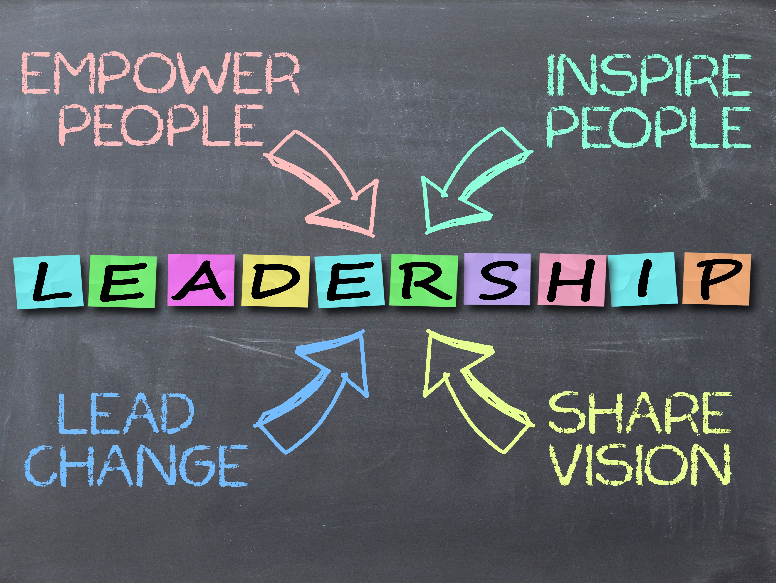
This module enables students to consolidate skills developed and to convey their understanding of academic research and writing skills whilst via a piece of academic writing. Through lectures and seminar discussions, research tasks individually and in groups, through skills sessions students will build a weekly understanding of their personal research area and how to utilise the research and skills developed along the way.